
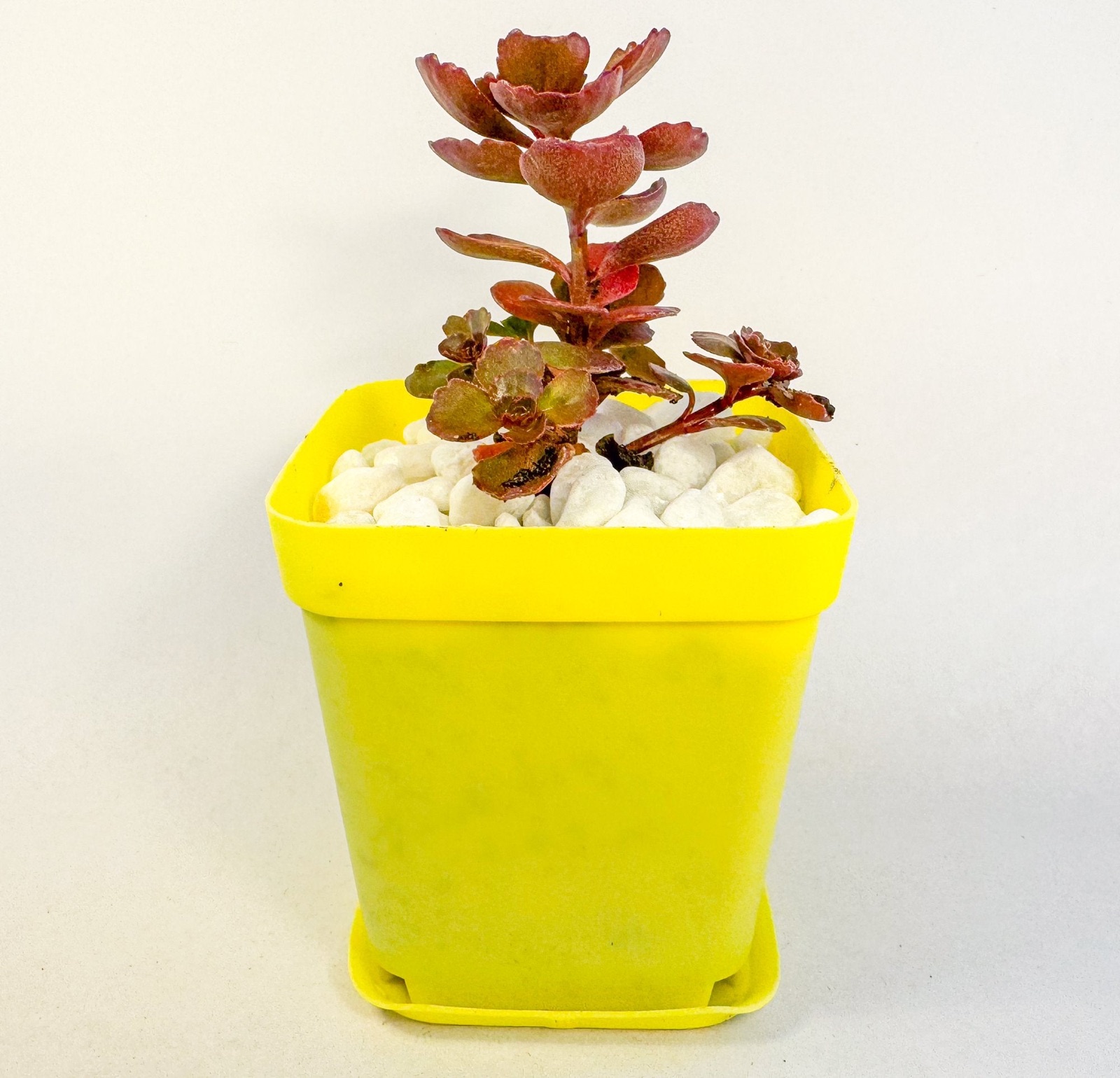
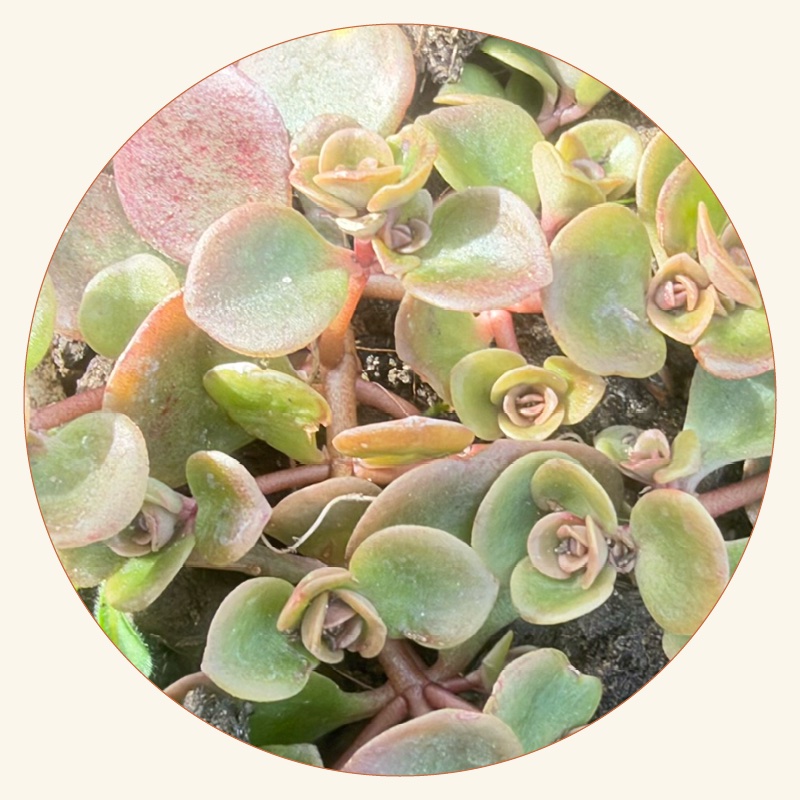
Sedum tetractinum 'Coral Reef' is a low Chinese stonecrop that knits into a tight mat of round, glossy leaves no bigger than a fingernail. In warm weather it is a fresh apple green, then cold nights and bright sun tint the leaves coral pink and red, which is where the name comes from.
It is a little softer than the stonecrops most UK gardeners know, so this guide explains where it does best, how to plant and water it, how to get it through a wet British winter, and how to grow the version we sell in a small yellow gift pot. Propagation and the few problems worth watching for are covered too.
Sedum tetractinum 'Coral Reef' at a glance
- Botanical name Sedum tetractinum 'Coral Reef'
- Common name Chinese stonecrop, Coral Reef sedum
- Plant type Low, mat-forming evergreen succulent perennial
- Hardiness RHS H4 (down to about -10 to -5°C)
- Height and spread Up to 10cm tall, spreading 30 to 45cm over a few years
- Flowering Small starry yellow flowers in summer
- Foliage Round, glossy green leaves that flush coral pink and red in cold weather and strong sun
- Position Full sun, warm and sheltered
- Soil Very free-draining chalk, sand or loam, or gritty compost in pots
- Good for Pots, troughs, rockeries, sunny windowsills and gifts
Choosing a warm, sheltered spot
Coral Reef wants full sun and shelter from cold winds. The RHS rates it H4, meaning it copes with roughly -10 to -5°C, so a frost pocket or an exposed north-facing bed is the wrong place. A south or west-facing rockery, a raised bed against a house wall or a gravel strip beside a path all hold more warmth.
Because it stays under 10cm tall and creeps outwards slowly, it suits the rim of a trough or the lip of a container where the rounded leaves can spill over the edge. In colder inland gardens it is wise to keep it in pots so it can be moved under cover when a hard frost is forecast.
Soil, compost and planting
Sharp drainage matters far more than richness. In the ground, work in horticultural grit or fine gravel until the soil feels loose and crumbly, and set the plant slightly proud so rain runs away from the crown. Chalky, sandy and loamy soils are all fine as long as they never sit wet.
For containers, use peat-free compost mixed roughly half and half with grit, or a ready-made cactus and succulent mix. Plant between April and June so roots settle before autumn, firm in gently, then top-dress with grit to keep the leaves off damp compost.
How much water Coral Reef needs
Once settled in the ground, Coral Reef rarely needs watering in a normal UK summer because the fleshy leaves store moisture. In the drier east of the country, including Lincolnshire, a thorough soak every couple of weeks during a long dry spell is plenty.
Pots dry out faster. Water when the compost is dry a finger's depth down, then let it drain completely. From October to March cut right back, especially for pots left outdoors, because cold combined with wet kills this plant far more often than cold alone. Our general sedum care guide explains the same principle across the wider family.
Getting a less hardy sedum through winter
Most of lowland Britain sees winters Coral Reef can handle, but long freezes or waterlogged soil will damage it. In a severe spell it may drop leaves and look bare, then reshoot from the stems in spring, so give it until May before deciding it has died.
- Move pots into an unheated greenhouse, cold frame or porch from late autumn.
- Raise containers on pot feet so they never stand in water.
- Cover plants in the ground with a cloche during long hard frosts, leaving the ends open for air.
- Root a few cuttings in late summer and keep them on a cool, bright windowsill as insurance.
Looking after the yellow pot gift
The gift version comes in a small yellow pot and makes a cheerful present for a sunny kitchen windowsill. Indoors, give it the brightest spot you have, ideally facing south, and water only when the compost is completely dry. Stems that stretch and leaves that space out are a sign it wants more light.
In late spring you can stand it outside on a sheltered patio or plant it into a trough. Check whether the pot has a drainage hole, and if it does not, lift the plant out after watering so nothing collects at the bottom. You will find it alongside our other plant gifts if you want to send one on.
Feeding, flowers and tidying
This stonecrop prefers lean rations. Rich feeding produces soft, floppy growth and dulls the red tints. One half-strength succulent feed in late spring is enough for pots, and plants in the ground need nothing at all.
The starry yellow flowers open in summer on short stems held just above the leaves. Snip the heads off once they brown and trim any shoots that wander out of shape. Bare patches in an older mat can be patched by pressing a few fresh cuttings into the gap.
Propagating from stems and leaves
Coral Reef roots so readily that one plant soon becomes a dozen. Snap off stem pieces about 5cm long between May and August, let the cut ends dry for a day, then push them into gritty compost. Keep them barely moist and they usually root within three or four weeks.
Rooted sections can also be eased away from the edge of the mat in spring and replanted straight away. Single leaves laid on compost will often sprout tiny plantlets, though this takes noticeably longer.
Problems, pests and safety
Rot from wet soil is the main risk, showing as blackened, mushy stems at the base. Cut away affected growth, take cuttings from healthy tips and improve drainage. Vine weevil grubs can eat the roots of potted sedums, so if a plant suddenly collapses in moist compost, tip it out and look for creamy, C-shaped larvae.
Slugs and snails sometimes graze soft spring shoots. Sedums are generally regarded as low risk to people and pets, but it is still sensible to stop dogs, cats and small children chewing any plant kept indoors.
Questions about Sedum tetractinum 'Coral Reef'
Is Sedum Coral Reef hardy in the UK?
It is rated RHS H4, so it survives about -10 to -5°C, which covers most UK winters in a sheltered, well-drained spot. Wet soil in cold weather is the bigger threat. In cold or exposed gardens, grow it in pots and move them under cover from late autumn.
Why are my Coral Reef leaves turning red?
The coral and red tints are natural and appear when temperatures drop or the plant gets strong sun. It is a harmless stress colour rather than a sign of disease. The leaves usually return to fresh green in mild, cloudy weather.
Can Coral Reef be grown as a houseplant?
Yes, as long as it gets several hours of direct sun on a bright windowsill. In low light it stretches and loses its compact, cushion shape. Many people keep it indoors in winter and move it outside from May to September.
Is Sedum tetractinum evergreen?
Usually it is. In a mild winter it holds its leaves, but during a long, hard freeze it can shed them and regrow from the stems in spring.
If that coral blush has won you over, you will find Coral Reef with the rest of our sedum collection, all grown on the Sedum & Sage farm in Metheringham. The yellow pot version makes a simple, long-lasting present for anyone with a sunny windowsill.