
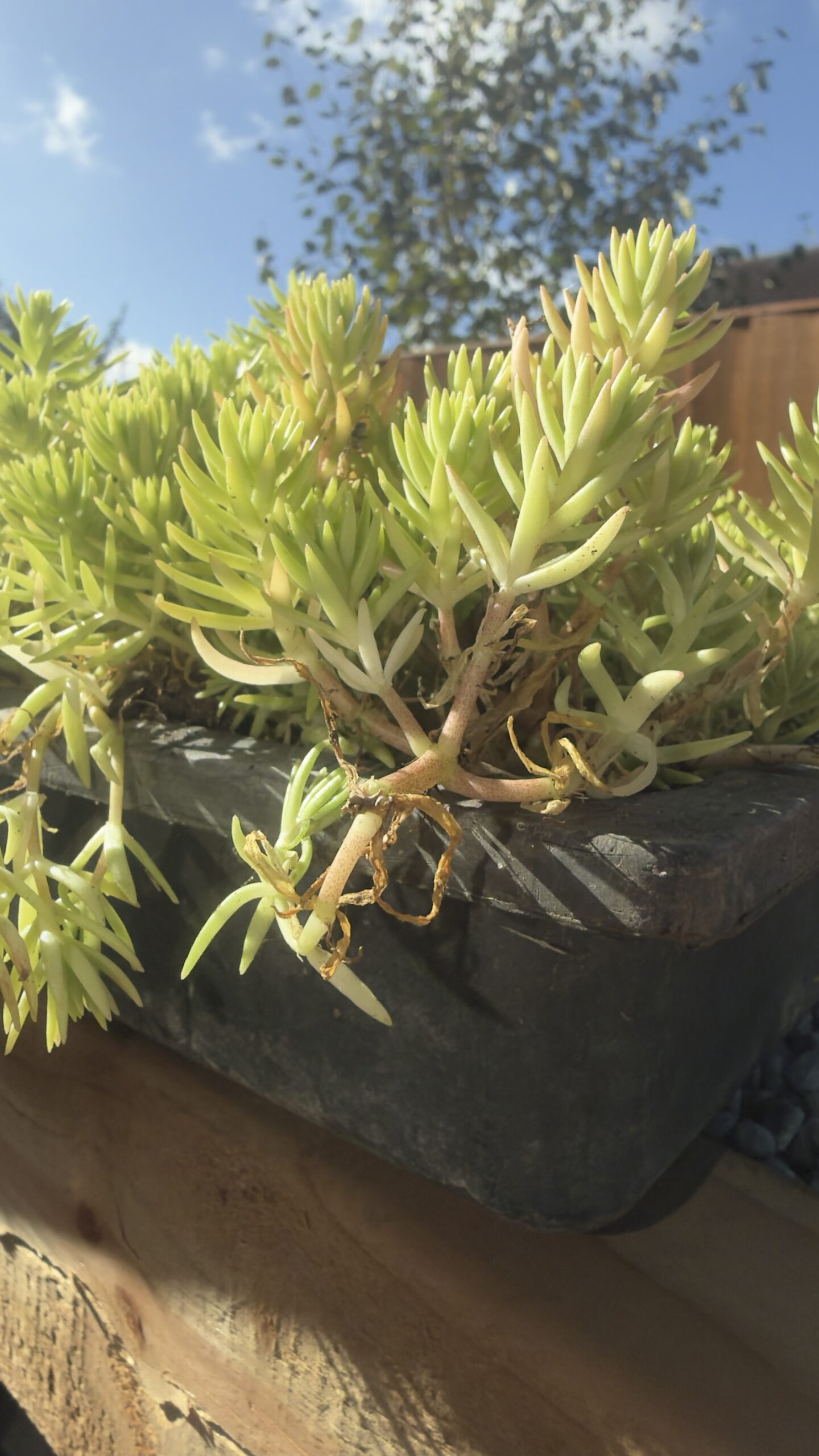
Sedum, also called stonecrop, is a family of hardy succulents. They range from tiny creeping carpets to taller border plants. When it comes to how to grow and care for sedum, the low-growing types are about the easiest plants in the garden: they need little water and hardly any feeding.
Why grow sedum?
- Evergreen or semi-evergreen leaves in greens, golds, reds and blues
- Star-shaped summer flowers that bees and butterflies love
- Very good drought tolerance once established
- Ideal for green roofs, gravel gardens, rockeries, wall tops and containers
Where to plant sedum
Give it as much sun as you can, ideally at least half a day. More than anything, sedum needs free-draining soil. It's happy in poor, gritty or stony ground but will rot in heavy, waterlogged clay. If your soil is heavy, dig in plenty of grit, or grow your sedum in raised beds, troughs or pots.
How to plant sedum
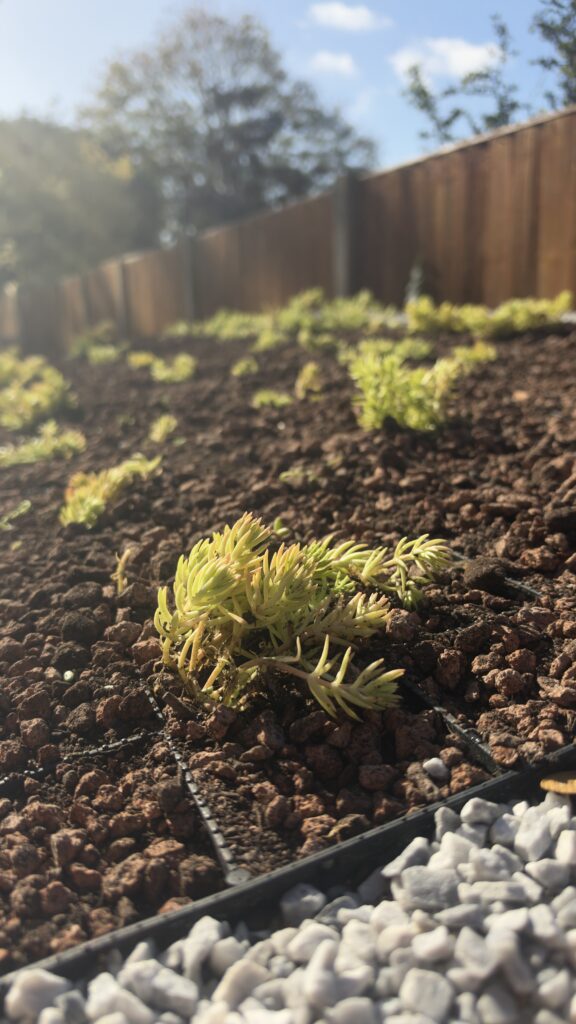
- Dig a hole a little wider than the pot and loosen the soil at the bottom.
- If the soil is heavy, add a handful of grit.
- Plant at the same depth it was in the pot and firm it in gently.
- Water well, then water whenever the soil dries out for the first few weeks.
Watering sedum
More sedum is killed by overwatering than by drought. Once established, sedum in the ground rarely needs watering except in a long dry spell. In pots, water when the compost is dry, and make sure the pot has drainage holes so water never collects at the bottom.
Feeding
Sedum needs very little feeding. Rich soil and too much fertiliser make it soft and leggy. For plants in pots, a light slow-release feed in spring is plenty.
Trimming and tidying
After flowering, cut off the faded flower heads to keep plants neat, and pull away any stems that have wandered too far. You can clip low, creeping sedums lightly to keep them compact.
Growing more sedum
Sedum is very easy to propagate. Snap off a short piece of stem and leave it for a day so the cut end dries. Then push it into a pot of gritty compost and keep it barely moist. It'll usually root within a few weeks.
Common problems
- Soft or mushy stems are almost always down to too much water or poor drainage.
- Leggy growth usually means too much shade, or soil that's too rich.
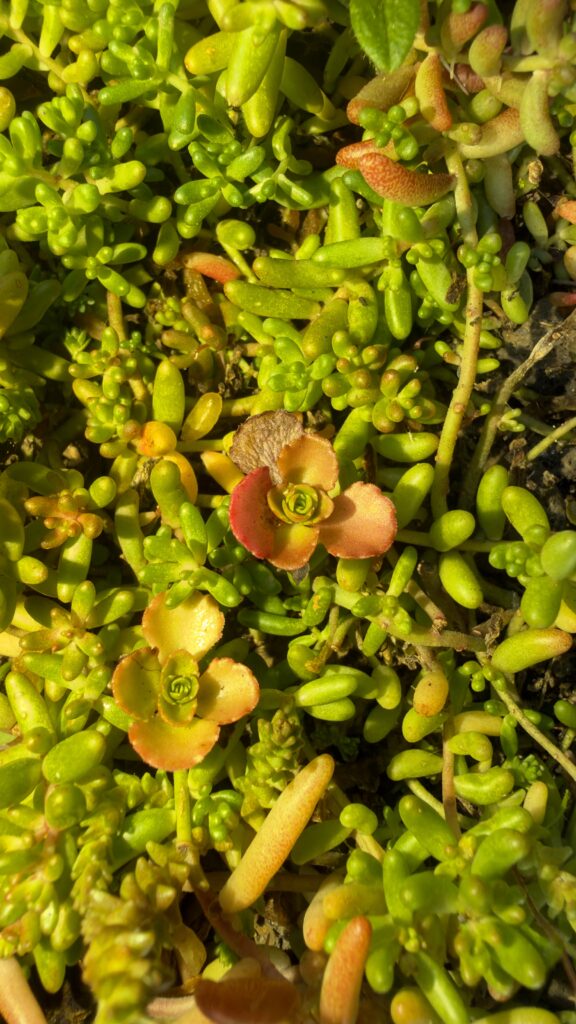
- Red or bronze leaves are a natural response to cold, sun or drought. Nothing to worry about.
- Vine weevil can be a problem in pots. If a potted sedum suddenly wilts, check the roots.
Sedum varieties to try
Our favourites are Sedum spurium 'Dragon's Blood', Sedum rupestre, Sedum album 'Athoum', Sedum reflexum 'Yellow Bouquet', Sedum tetractinum 'Coral Reef' and 'Rose Carpet'. You'll find them all in our sedum plants collection, grown on our farm in Lincolnshire.