
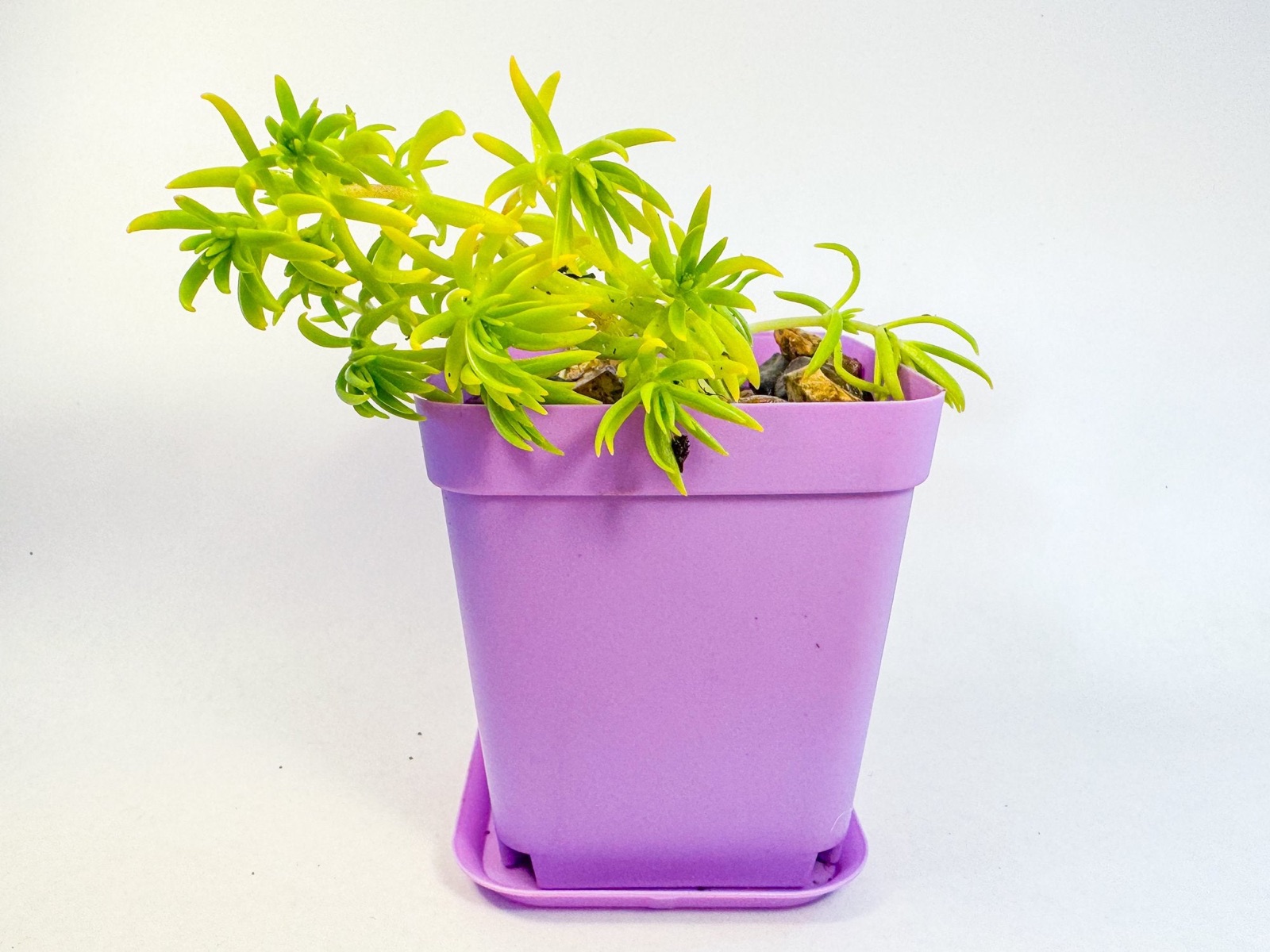
Sedum mexicanum 'Lemon Coral' is a cheerful little plant. Its branching stems are covered in fine, needle-like leaves of a vivid lime green, like a small sea coral in sunshine, and it brightens any windowsill or patio pot it lands in.
We sell it as a gift in a small pink pot, so many readers arrive here having just been given one. This guide covers how much light it needs, how to water it without drowning it, how to keep it alive through a British winter and how to grow more from cuttings.
Sedum mexicanum 'Lemon Coral' at a glance
- Botanical name Sedum mexicanum 'Lemon Coral'
- Common name Lemon Coral stonecrop, Mexican stonecrop
- Plant type Evergreen, mounding succulent perennial, often grown as a container plant
- Hardiness RHS H4 (about -10C), but it dislikes cold, wet winters and is best given shelter
- Height and spread 10 to 20cm tall, spreading 25 to 35cm
- Flowering Small yellow starry flowers in summer, not always produced on pot plants
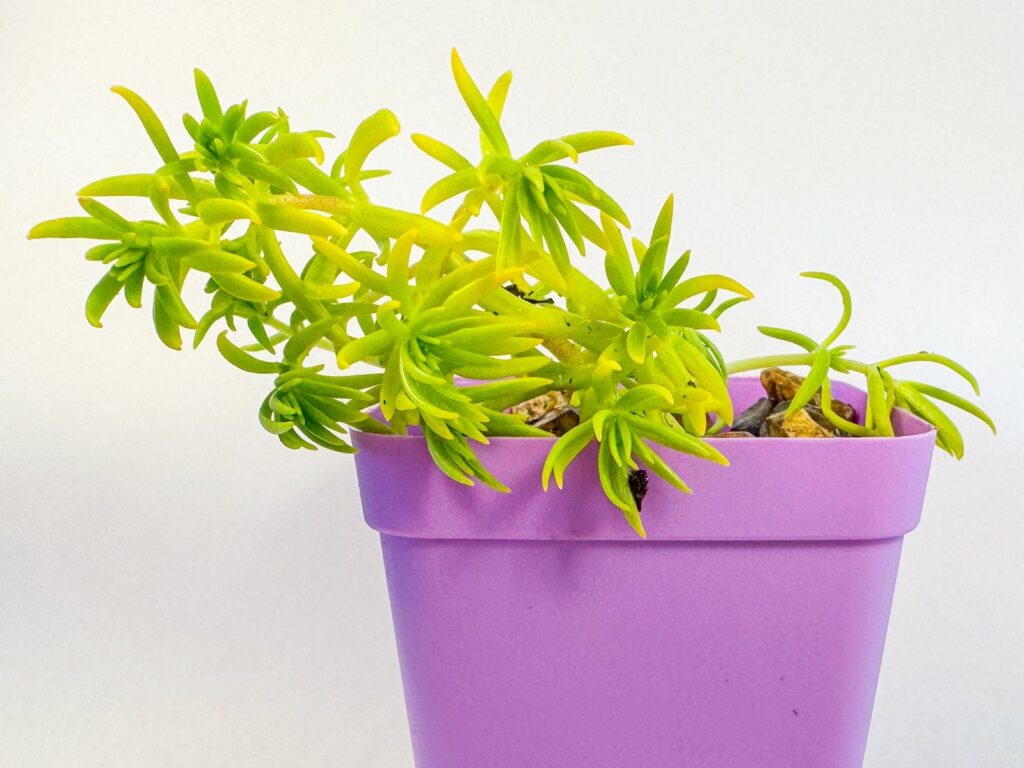
- Foliage Bright lime-green needle-like leaves on branching stems, sometimes golden in full sun
- Position Full sun outdoors or the brightest windowsill indoors
- Soil Gritty, free-draining compost
- Good for Gifts, windowsills, patio pots, hanging baskets and summer containers
First steps with your gift pot
Take your plant out of any wrapping as soon as it arrives and stand it somewhere bright. Check the base of the pot. If water cannot drain away, tip out anything that collects after watering, as soggy roots are the fastest way to lose it.
The plant is happy in its pot for several months. In spring, once roots appear through the base, move it into a pot one size larger with gritty compost.
Light makes all the difference
That glowing lime colour depends on light. Indoors, give it the sunniest windowsill you have, ideally south or west facing. In dim corners the stems stretch towards the window, the leaves turn a dull green and the mound flops open.
From late May to September it enjoys a holiday outdoors on a sunny patio or doorstep. Introduce it gradually over a week, starting in light shade, so the leaves do not scorch after months behind glass.
Watering without drowning it
Water thoroughly, then wait until the compost is dry before watering again. In summer that may be once a week outdoors and less often inside. In winter, every three to four weeks is usually plenty.
Plump, firm leaves mean the plant is content. Soft, yellowing or translucent stems mean too much water, while wrinkled leaves mean it is time for a drink.
- Water at the base rather than over the foliage.
- Never leave the pot standing in a saucer of water.
- Use a terracotta pot when repotting, as it dries out faster than plastic.
Compost and feeding
Repot into a mix of roughly equal parts peat-free compost and grit, or a ready-made cactus compost. Lemon Coral has shallow, fine roots, so a wide pot suits it better than a deep one.
Feed once a month from April to August with a half-strength liquid fertiliser for cacti or tomatoes. Stop feeding in autumn so the plant can slow down for winter.
An honest word on winter
This is one of the less hardy sedums. Although the RHS rates it H4, it struggles when cold combines with wet, and many plants left in open ground in a British winter rot by spring. Treat it as a tender perennial and you will rarely be disappointed.
Before the first frosts, usually in October, bring pots into a cool, bright room, porch, conservatory or frost-free greenhouse. A spot around 5 to 12C is ideal. Keep it on the dry side until spring and expect slower, slightly paler growth.
Pinching back and taking cuttings
If the mound looks straggly, snip the longest stems back by a third in spring. It soon branches again and fills out.
Those trimmings are your next plants. Let 4 to 5cm cuttings dry for a day, then push them into gritty compost and keep them in bright light. They root within a couple of weeks, and it is wise to keep a spare pot indoors each winter as insurance.
Troubleshooting a sad Lemon Coral
Stretched, pale growth means too little light, so move it closer to the glass. Blackened stems at soil level point to rot from overwatering, and the best fix is to take cuttings from healthy tips and start again.
Indoors, look out for mealybugs, which appear as white fluffy patches between stems. Dab them with a cotton bud dipped in surgical spirit. Outdoors, aphids may cluster on the soft tips and are easily rinsed off.
Displays, gifts and pairings
The bright foliage looks lovely spilling from hanging baskets and window boxes in summer, and it makes a striking contrast with dark-leaved plants such as Aeonium 'Zwartkop' or purple sempervivums.
As a present, it is cheerful and easy for anyone to look after on a windowsill, even a first-time plant owner. Once it outgrows the pink pot, our general sedum care guide explains how to treat it alongside hardier stonecrops. It is generally considered low risk to pets, though it is best kept out of reach of nibbling cats.
Questions about Sedum mexicanum 'Lemon Coral'
Can Lemon Coral sedum live outside in the UK?
It can sit outside from late spring to early autumn and enjoys the sun. In winter it often rots in cold, wet ground, even though it can tolerate a few degrees of frost when dry. Bring pots under cover by October to be safe.
Why is my Lemon Coral sedum turning green and leggy?
Lack of light is almost always the cause. The bright lime colour needs several hours of direct sun. Move it to a sunnier spot and trim the stretched stems, which will root easily as cuttings.
Is Lemon Coral sedum an indoor plant?
It grows well indoors on a sunny windowsill, especially in winter. It is happiest with a summer outdoors in full sun, which keeps it compact and brightly coloured.
Does Lemon Coral sedum flower?
Yes, it can produce small yellow star-shaped flowers in summer, usually on plants that get plenty of sun outdoors. Plants kept indoors often skip flowering, but the foliage is the main attraction.
Lemon Coral is a small plant with a big personality and a lovely way to bring colour to a windowsill. It comes ready to give in its pink pot, and you can browse it with other easy-care presents in our gift plants range.