
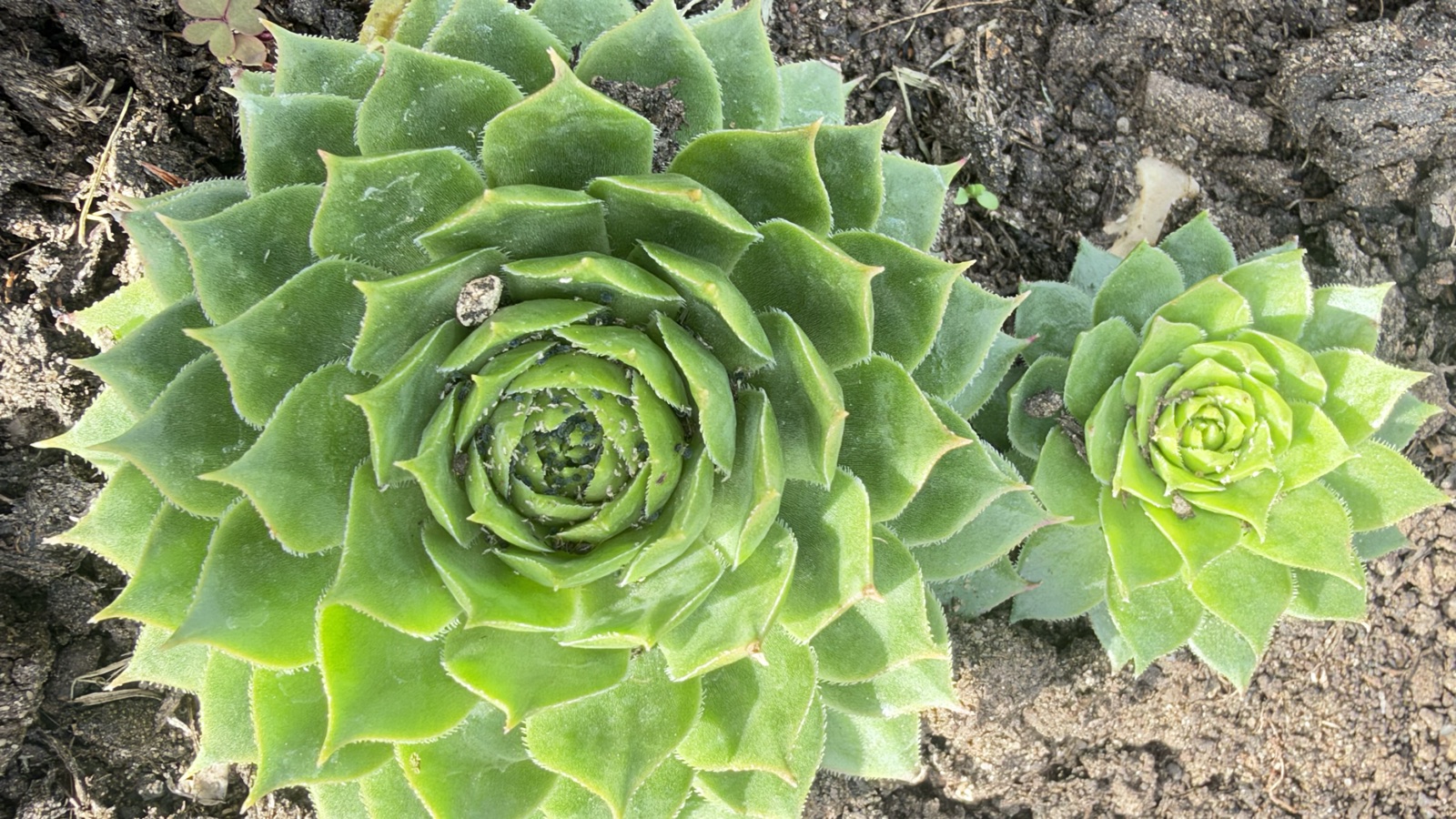
Sempervivum tectorum is the original roof plant. Its species name means of the roofs, and for centuries people across Europe pressed it into thatch, tiles and wall tops, partly because it asked for nothing and partly because folklore said it kept lightning away. It is also the plant most people picture when they hear the name hens and chicks.
This guide is about that one species and the family habits that give it the nickname. You will find out how the mother rosette raises its offsets, why a flowering rosette always dies, how to plant it on a roof or wall, and how to share out the chicks to start new colonies.
Sempervivum tectorum, hens and chicks at a glance
- Botanical name Sempervivum tectorum
- Common name Common houseleek, hens and chicks, roof houseleek
- Plant type Evergreen, mat-forming succulent perennial
- Hardiness RHS H7 (hardy below -20C)
- Height and spread Rosettes up to 10cm tall and 5 to 10cm across, colonies slowly spreading to 30 to 50cm, flower stems to about 20cm
- Flowering July to August, starry reddish-purple to pink flowers, only on mature rosettes
- Foliage Fleshy green leaves with pointed tips that turn maroon or red-brown in strong sun and cold weather
- Position Full sun
- Soil Poor, gritty and very free-draining, any pH
- Good for Roofs, wall tops, troughs, crevices, containers and green roofs
What sets the common houseleek apart
Among the houseleeks you are likely to meet, tectorum is one of the larger and tougher species. A well-grown rosette can reach 10cm across, with smooth green leaves tipped in deep red that spreads further down the leaf in a hot, dry summer or a hard frost.
It is also very variable. Plants from different mountain ranges differ in size and colour, so two pots labelled tectorum can look surprisingly different. That variation is normal and not a sign that either plant is mislabelled.
How the hens raise their chicks
Each mature rosette, the hen, sends out thin runners called stolons from between its lower leaves. A small rosette, the chick, forms at the tip of every runner and sits a few centimetres from its parent.
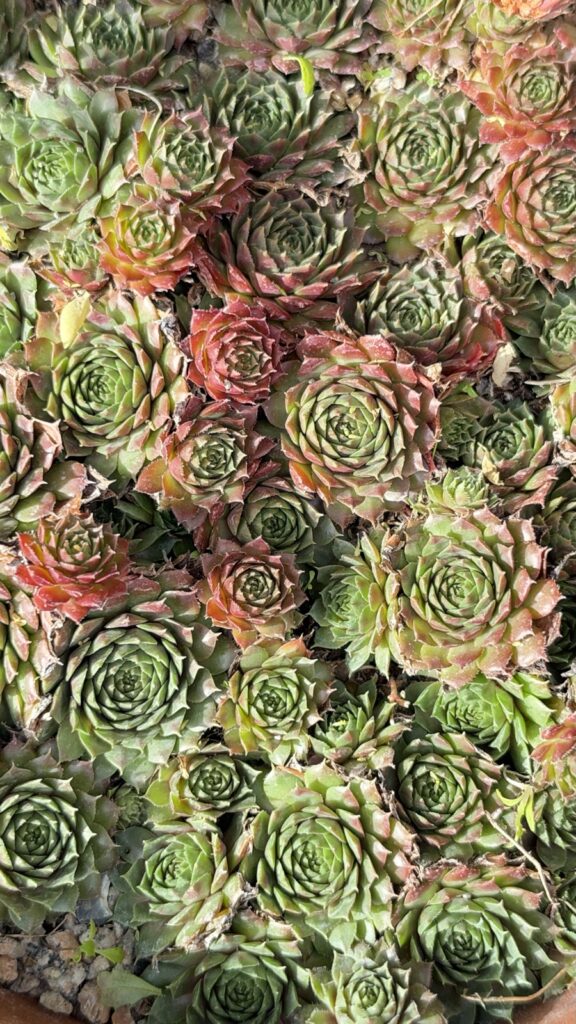
Once the chick touches soil it puts down roots of its own. The runner then withers and the youngster carries on independently, eventually producing chicks itself. Over three or four years a single plant becomes a tight, domed mat, and any chick that rolls off a wall or roof will often root wherever it lands.
Why a rosette flowers and then dies
Houseleek rosettes are monocarpic, which means each one flowers once and then dies. After several years a mature hen stretches upwards, its centre lengthening into a thick, leafy stem about 20cm tall topped with starry reddish-purple flowers in high summer.
This is the end of that rosette, not the plant. The chicks around it carry on, and they soon close the gap. When the flower stem turns brown, twist it out with the old rosette attached and sprinkle a little grit into the hole. In a crowded colony you may lose a few rosettes this way every year without the clump looking any thinner.
Planting on roofs, walls and gritty troughs
Tectorum needs remarkably little root room. A crack in a wall, a gap between roof tiles or 5cm of gritty substrate on a shed roof is enough. Tuck each rosette in with a pinch of compost mixed with grit, and a little moss pressed around it helps hold it while the roots grip.
On flat or gently sloping roofs it pairs well with sedums in a shallow mat, and our guide to adding a green roof to a shed or log store covers the build. For compost recipes, pot choice and care that applies to every houseleek, see our general sempervivum care guide.
Water, food and the real winter threat
Plants in the ground or on a roof rarely need watering once rooted. In pots, give a good soak only when the compost has been bone dry for a week or so in summer. Skip feeding altogether, as rich conditions produce soft, open rosettes that lose their colour and rot more easily.
Cold is not a worry, since this species is rated H7 and shrugs off the hardest British frost. Lying wet is the danger. Raise pots on feet, never stand them in saucers, and tilt shallow pans slightly so rain runs off during a soggy November to February.
Sharing out the chicks
Spare chicks are the easiest way to fill a new trough or give a friend a start. Spring and early summer are the best times, when new roots form quickly.
- Choose a chick that has its own small roots or sits at the end of a long runner.
- Snip or gently pull the runner close to the parent rosette.
- Set the chick on the surface of gritty compost and press it in lightly, adding no more than a dribble of water.
- Keep it in a bright spot out of fierce midday sun for two weeks, then treat it as an adult.
- Leave a few chicks attached to the hen so the original colony keeps its shape.
Problems to keep an eye on
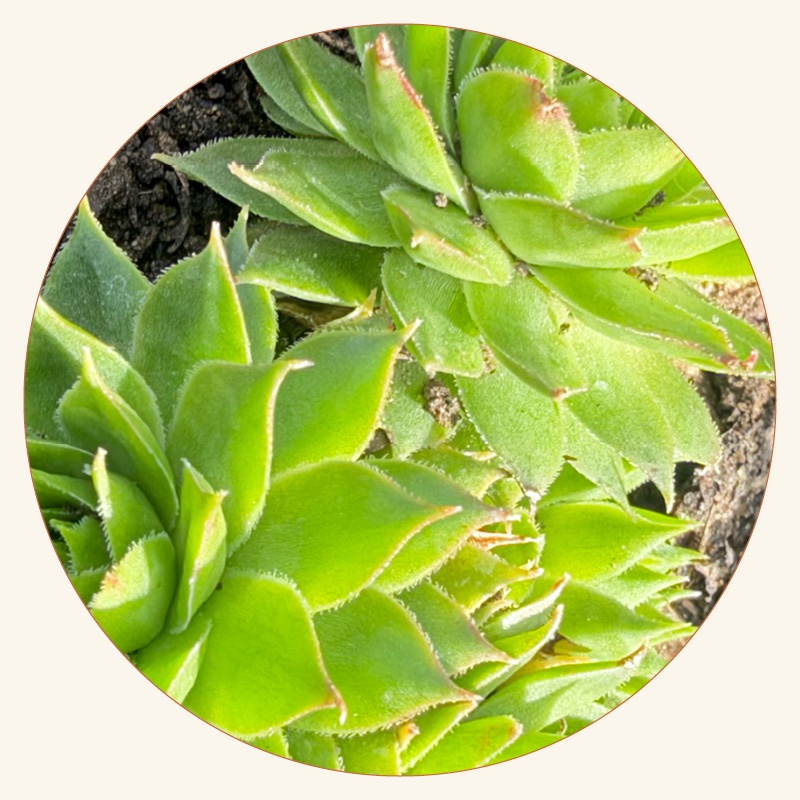
Vine weevil grubs are the main threat in pots, eating the roots until the rosette lifts away in your hand. Birds such as blackbirds and jackdaws sometimes pull rosettes out while hunting for insects, so simply press them back in.
Houseleek rust shows as unusually tall, narrow rosettes with orange pustules on the leaves. Remove affected rosettes promptly and bin them rather than composting. Rosettes that are pale, open and leaning usually just need more sun.
Family-friendly and full of character
Houseleeks are generally regarded as non-toxic to people, cats and dogs, which makes tectorum a good choice for a child's first pot. The fleshy leaves were once rubbed on stings and minor burns as a folk remedy, which is part of why so many cottages kept a clump by the door.
For a striking display, plant a single old boot, chimney pot or strawberry planter and let the chicks spill out of every opening. Mix tectorum with smaller cobweb houseleeks for contrast in size and texture.
Questions about Sempervivum tectorum, hens and chicks
Why is my hens and chicks plant dying after flowering?
Only the rosette that flowered is dying, because each houseleek rosette flowers once and then ends its life. The chicks around it are unaffected and will fill the space. Twist out the dead stem and rosette once it browns.
Can Sempervivum tectorum really grow on a roof?
Yes, that is where its name comes from. It roots happily in a few centimetres of gritty compost between tiles or on a green roof and survives on rainfall alone. Make sure the roof can carry the weight of the substrate if you are building a full green roof.
How fast do hens and chicks spread?
A single rosette usually produces several chicks in its first full summer, and a small pot can be crowded within two to three years. Growth is fastest in full sun with gritty soil and a little water in spring. In shade or rich compost they produce fewer, weaker offsets.
Is hens and chicks the same plant as Sempervivum tectorum?
Hens and chicks is a common name used for several plants, including other houseleeks, Jovibarba and even echeverias in America. Sempervivum tectorum is the classic European plant behind the name. All share the same habit of producing offsets around a parent rosette.
If you would like your own colony of hens and chicks, or some other houseleeks to grow alongside them, have a look at our sempervivum collection. Every plant is grown outdoors on our Lincolnshire farm, so it arrives used to British weather and ready to start producing chicks.