
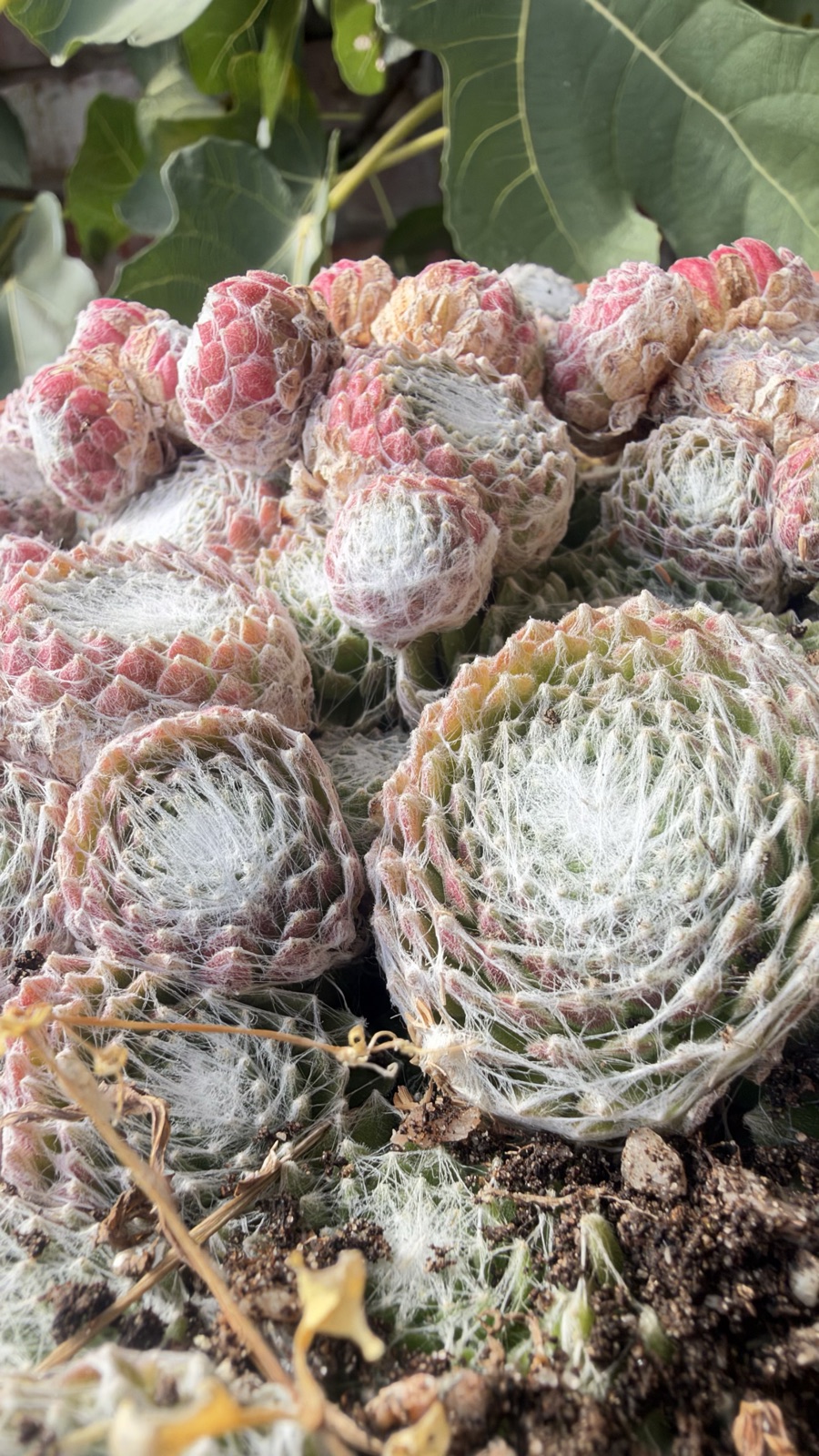
Look closely at a cobweb houseleek and you will see each tiny rosette strung with silky white threads from leaf tip to leaf tip, as though a spider has worked across it overnight. That webbing is what makes Sempervivum arachnoideum one of the most loved alpines, and it is entirely the plant's own doing.
This guide focuses on what makes the cobweb houseleek different from its larger relatives. You will learn what the webs are, how to keep them white and full, the compost and containers that suit such small rosettes, and how to bring it through a wet British winter.
Sempervivum arachnoideum, cobweb houseleek at a glance
- Botanical name Sempervivum arachnoideum
- Common name Cobweb houseleek, spiderweb houseleek
- Plant type Evergreen, mat-forming alpine succulent
- Hardiness RHS H7 (hardy below -20C)
- Height and spread Rosettes 1 to 3cm across and under 10cm tall, mats spreading 10 to 30cm, flower stems up to about 12cm
- Flowering Summer, usually June to August, starry bright pink flowers about 1cm wide
- Foliage Green to reddish rosettes laced with fine white hairs, reddest in strong sun and cold spells
- Position Full sun, ideally sheltered from dripping rain
- Soil Very gritty, sharply drained, low in nutrients
- Good for Troughs, alpine pans, tufa, small containers, wall crevices and gifts
Where the cobwebs come from
The threads are long hairs that grow from the tip of each leaf and join up across the rosette. In its native Alps, Pyrenees and Apennines they shade the leaves from intense mountain sun and help trap moisture from mist and dew.
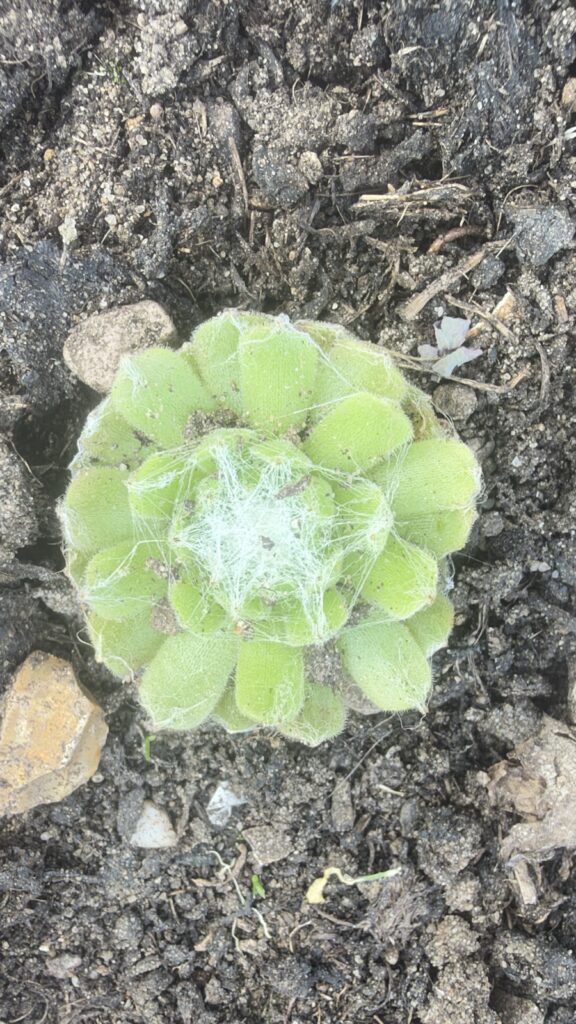
Webbing is heaviest on mature rosettes in bright light and during the growing season. Young offsets start almost bare and gain their threads as they grow, so a newly potted plant often looks better after its first summer than on the day it arrived.
Finding a spot that keeps the webs white
Give cobweb houseleeks the sunniest spot you have. In shade the rosettes open out, turn plain green and lose much of their webbing, while full sun keeps them tight, red-flushed and densely threaded.
Heavy rain is the other enemy. Raindrops flatten the webs and splash soil onto them, leaving them grubby. A position under the edge of a porch, on a sunny windowsill outside or on a sheltered shelf keeps the threads clean and fluffy.
A gritty mix for small rosettes
Because the rosettes are so small, they sit right at soil level and rot quickly if compost stays damp. Mix roughly equal parts loam-based compost such as John Innes No. 1 and horticultural grit, then top the surface with a layer of fine gravel.
That gravel collar does two jobs. It keeps the base of each rosette dry and stops soil splashing onto the white webs when you water. The same mix suits many of the other small plants in our alpines collection if you are planting a mixed trough.
Watering without spoiling the web
Always water at the edge of the pot or trough, never over the top of the rosettes. Water sitting in the webbing takes a long time to dry and encourages rot in the heart of the plant.
From April to September a pot needs watering only when the compost is completely dry, typically every ten days to two weeks in warm weather. In the ground or a large trough, rainfall is usually enough once the plants have rooted. No feeding is needed.
Winter wet and simple protection
With an H7 rating the cobweb houseleek is untroubled by frost, and in its mountain home it spends winter dry beneath snow. The British problem is months of cold rain. Rosettes that stay soggy from November to February can turn brown and mushy from the centre outwards.
Move pots under the eaves, into an open-sided cold frame or onto a covered bench for the worst months. For a trough that cannot be moved, prop a sheet of glass or clear plastic a few centimetres above the plants, leaving the sides open for air. Gardens on Lincolnshire's drier eastern side often manage without cover, but heavy clay gardens further west benefit from it.
Tiny containers and gift ideas
Small rosettes make the cobweb houseleek ideal for containers that would swamp other plants. Any container works as long as water can escape, so drill a hole or add a thick layer of grit at the base.
- A shallow terracotta pan planted with three or four rosettes and topped with grit.
- A lump of tufa rock with rosettes tucked into drilled holes.
- A vintage teacup, tin or large seashell with a drainage hole added.
- The pockets of a strawberry planter alongside larger houseleeks.
- A gap in a dry stone wall or between paving slabs in full sun.
Raising new cobweb rosettes
Offsets form on very short runners, so cobweb houseleeks make tight, mounded clusters rather than spreading mats. In spring, gently ease a well-webbed offset away from the cluster and lay it on gritty compost.
Rooting usually takes two to three weeks. A potted cluster of offsets makes a thoughtful present, and you will find more ideas in our gifts range.
What dulls or damages the web
Dust, algae and soil splash make webs look grey. Clean them by gently blowing across the rosette rather than rinsing. Moss creeping into a pot can be picked out with tweezers.
In pots, vine weevil grubs and root mealybug are the pests to watch, so check the roots if a rosette loosens. As with all houseleeks, each rosette dies after flowering, so a gap in summer is normal and soon fills.
Questions about Sempervivum arachnoideum, cobweb houseleek
Is the webbing on my cobweb houseleek caused by spiders or pests?
No, the threads are the plant's own hairs and a sign of a healthy rosette. They grow from the leaf tips and join across the top of the rosette. Pest webbing from spider mites is much finer, sits under leaves and comes with speckled, yellowing foliage.
Why has my cobweb houseleek lost its webbing?
The usual causes are too little sun, overhead watering or heavy rain flattening the threads. Webbing also thins in winter and on young offsets. Move the plant into full sun and water from the side, and the webs will thicken through the next growing season.
Can cobweb houseleeks live outside all winter in the UK?
Yes, they are fully hardy and cope with severe frost. What they dislike is sitting wet for weeks. Gritty compost, pots raised off the ground and a little overhead cover in the wettest months will keep them sound.
What colour are cobweb houseleek flowers?
They produce bright pink, starry flowers about 1cm across on short, leafy stems in summer. Many gardeners find them a pleasant surprise because the flowers look large for such small rosettes. The flowering rosette then dies and its offsets take over.
Cobweb houseleeks look wonderful grown with other rosettes in a sunny trough. Browse our sempervivum collection to find companions in different sizes and colours, all raised outdoors so they are hardened to life in a British garden.