
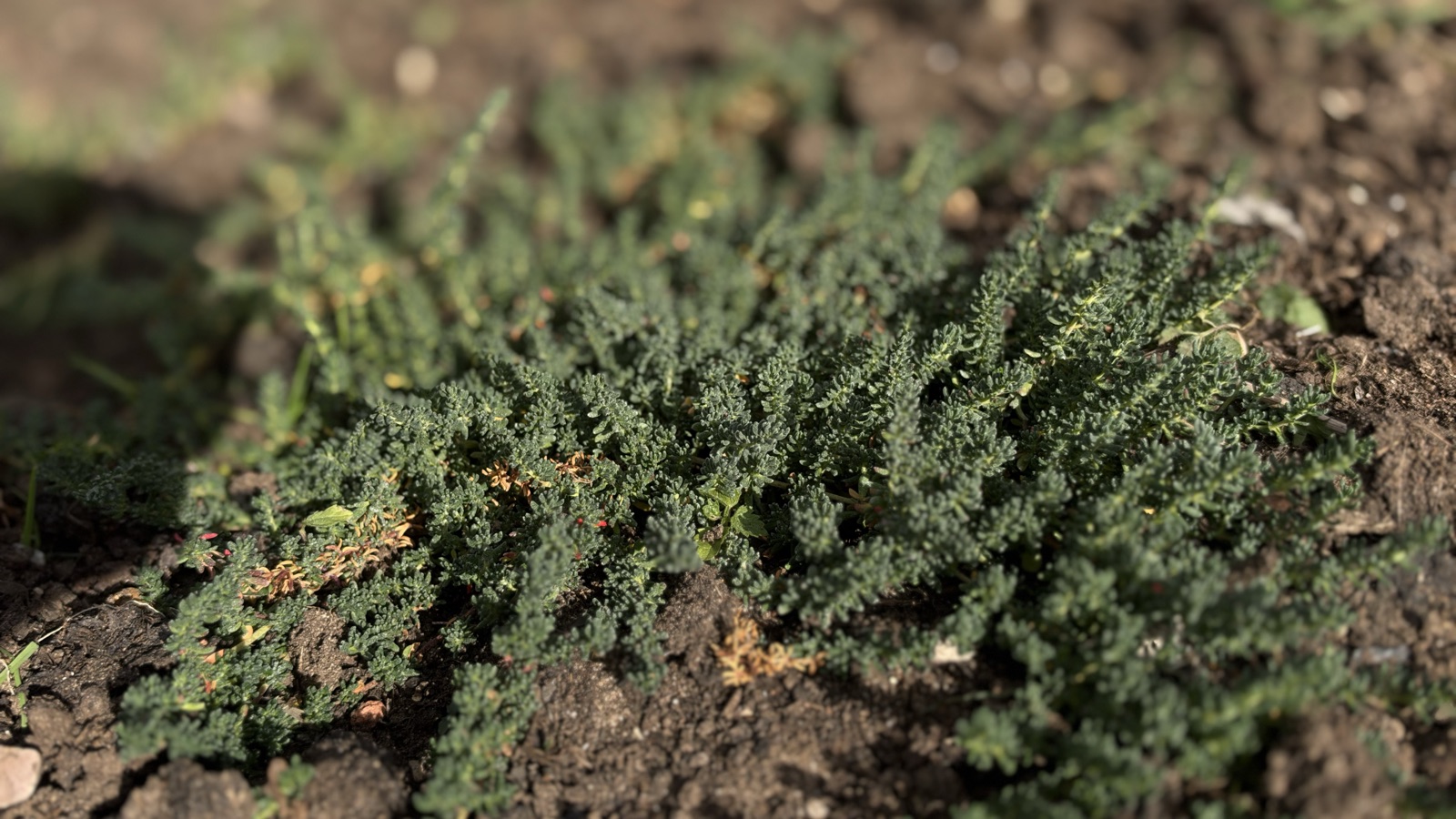
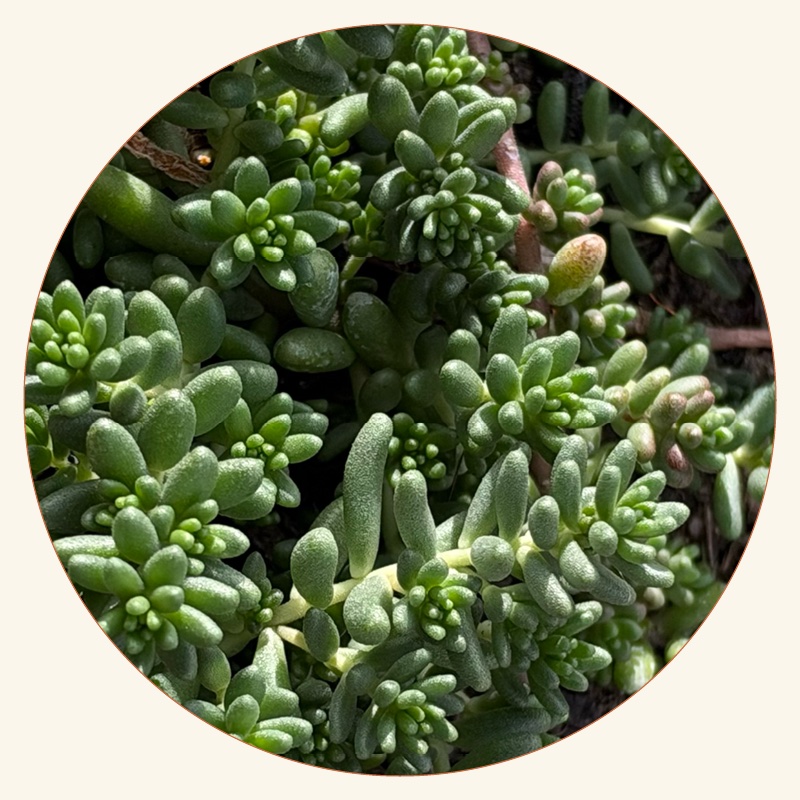
Sedum oreganum is a small evergreen stonecrop from the cliffs and rocky slopes of the American Pacific Northwest, and it behaves just as you would expect a plant from that background to behave. It hugs the ground in a tight mat of glossy, spoon-shaped leaves, laughs at hard frost and turns from fresh green to bronze-red when the sun is strong.
This guide covers where to plant it, how to get the drainage right, how little water and food it needs and how to bulk it up from cuttings. You will also find ideas for using it on green roofs and in troughs, plus answers to the questions gardeners ask most.
Sedum oreganum at a glance
- Botanical name Sedum oreganum
- Common name Oregon stonecrop
- Plant type Evergreen, mat-forming succulent perennial
- Hardiness RHS H7 (hardy below -20C)
- Height and spread Up to 10cm tall, spreading 20 to 50cm over several years
- Flowering Starry bright yellow flowers in summer, usually July to August
- Foliage Glossy spoon-shaped green leaves that flush bronze-red in strong sun and cold
- Position Full sun, ideally south or west facing
- Soil Sharply drained sand, chalk or stony loam, neutral to alkaline
- Good for Green roofs, dry stone walls, troughs, gravel gardens and path edges
Choosing a sunny, open spot
Oregon stonecrop colours best in full sun. In a south or west-facing position the rosettes stay compact and the leaf tips take on a coppery flush through summer, while in shade the mat opens up, turns plain green and flowers sparingly.
It carries the RHS H7 rating, the top hardiness band, so cold is never the problem in a UK garden. What it dislikes is lingering wet, so avoid low spots where water sits in winter and keep it clear of shrubs that drip onto it.
Good homes include the edge of a gravel path, the cracks of a dry stone wall, a raised bed or the front of a sunny rockery where nothing taller will flop across it.
Soil and planting out
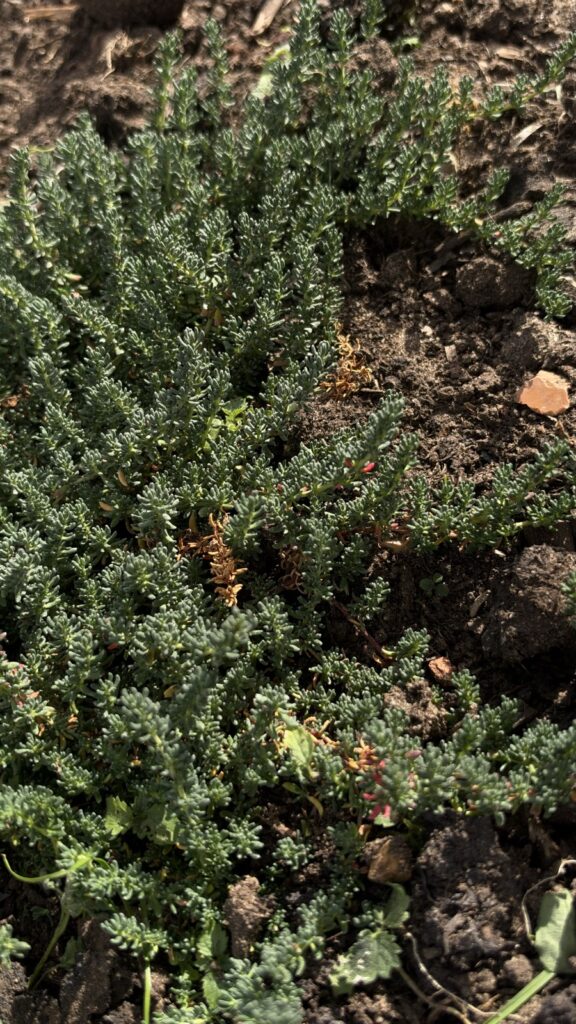
Any free-draining soil will do, including sand, chalk and stony loam, and it is happy from neutral to alkaline. On heavy clay, work in plenty of horticultural grit or plant on a slight mound so the crowns sit above the wettest layer.
Plant from spring to early autumn, setting pot-grown plants about 20cm apart if you want them to knit into a carpet within a couple of seasons. Firm them in, water once, then top-dress with fine gravel so the leaves rest on something dry rather than bare earth.
- For containers, mix roughly half peat-free compost with half grit or perlite.
- Choose pots with drainage holes and raise them on feet over winter.
- Spread a gravel or slate mulch around the crowns to keep the rosettes clean.
How much water does it need
Once settled, very little. The fat leaves store moisture, and an established mat in open ground can sit through a typical dry spell on the east side of England without help. Water new plants weekly in their first summer if rain is scarce, then let the weather take over.
Pots are different because they dry out fast in July and August. Give them a thorough soak when the compost is dry a couple of centimetres down, then let the excess drain away completely. Wrinkled leaves mean thirst, while soft, translucent ones mean too much water.
Feeding, or mostly leaving it alone
Rich soil makes Sedum oreganum lax and less colourful, so skip routine feeding in the ground. Lean conditions keep the mat tight and the red tones strong.
In containers that have been in the same compost for two or three years, one dose of a low-nitrogen liquid feed in late spring is plenty. Half-strength tomato food works well. Never feed in autumn, because soft new growth is the part most likely to rot over winter.
Trimming spent flowers and keeping the mat neat
The starry yellow flowers sit on short stems just above the foliage and are popular with bees and hoverflies. Once they fade, shear the stems off with scissors for a neat carpet, or leave them if you prefer a looser look.
In spring, pull out any patches that have gone bare or brown in the centre and press a few healthy rosettes into the gap. Clear away fallen leaves at the same time, since a wet blanket of debris is the commonest cause of rot in a sedum mat.
Propagating from cuttings and divisions
Few plants are easier to multiply. Every rosette that breaks away can root, which is why the mat creeps so steadily across gravel.
- Snip 3 to 5cm shoots in spring or summer and let the cut ends dry for a day.
- Lay them on gritty compost or press them straight into the ground where you want new plants.
- Keep them barely moist and out of scorching midday sun until roots form, usually within three weeks.
- Lift and split larger clumps in spring, replanting the pieces at the same depth.
Pests and problems to watch for
Vine weevil larvae are the main threat in pots. If a plant suddenly wilts and lifts away with no roots attached, look for creamy, curled grubs in the compost and treat with a biological nematode drench in late summer.
Aphids sometimes gather on flower stems in a warm spell and can be rinsed off with a hose. Blackbirds may scratch at new plantings while hunting insects, so pin young pieces down with a little gravel until they root.
Blackened rosettes after a wet winter usually point to poor drainage rather than disease. Remove the affected pieces and add grit before replanting.
Design ideas for roofs, walls and troughs
Its shallow roots and low height make Oregon stonecrop a strong choice for a living roof on a shed or log store, where it mixes well with Sedum album and Sedum spurium. Our guide to adding a green roof to a shed or bike store explains the layers you need.
In a trough or old stone sink, pair it with silver sempervivums, encrusted saxifrages and creeping thymes for a contrast of rosette shapes. Along a path edge it softens hard lines and tolerates the odd stray footstep.
Because it stays under 10cm, it also makes a living mulch beneath taller dry-garden plants such as lavender, Stipa tenuissima and Euphorbia myrsinites.
Questions about Sedum oreganum
Is Sedum oreganum evergreen?
Yes, the rosettes stay on the plant all year. In cold or very sunny weather the leaves deepen from green to bronze or copper-red, then soften back to green with new growth in spring. The colour change is normal and a sign the plant is in a good spot.
How fast does Oregon stonecrop spread?
A single plant usually covers 20 to 30cm in its first couple of years in a sunny, gritty position. The RHS gives an ultimate spread of up to 50cm. It is a steady creeper rather than a thug and is easy to pull back where it strays.
Is Sedum oreganum safe for pets?
Oregon stonecrop is not listed as toxic to cats or dogs, and sedums in general are regarded as low risk. Eating a large amount of any garden plant can upset a pet's stomach, so it is still sensible to discourage chewing.
Can you walk on Sedum oreganum?
It copes with very light, occasional footfall, for example between stepping stones, but not regular traffic. The fleshy leaves bruise and snap off if trodden on often, so plant it beside paths rather than across them.
If Oregon stonecrop sounds right for your gravel or roof, you will find it alongside our other pot-grown stonecrops in the Sedum collection. Every plant is raised on our Lincolnshire farm in gritty compost, so it arrives ready for a dry, sunny home.