
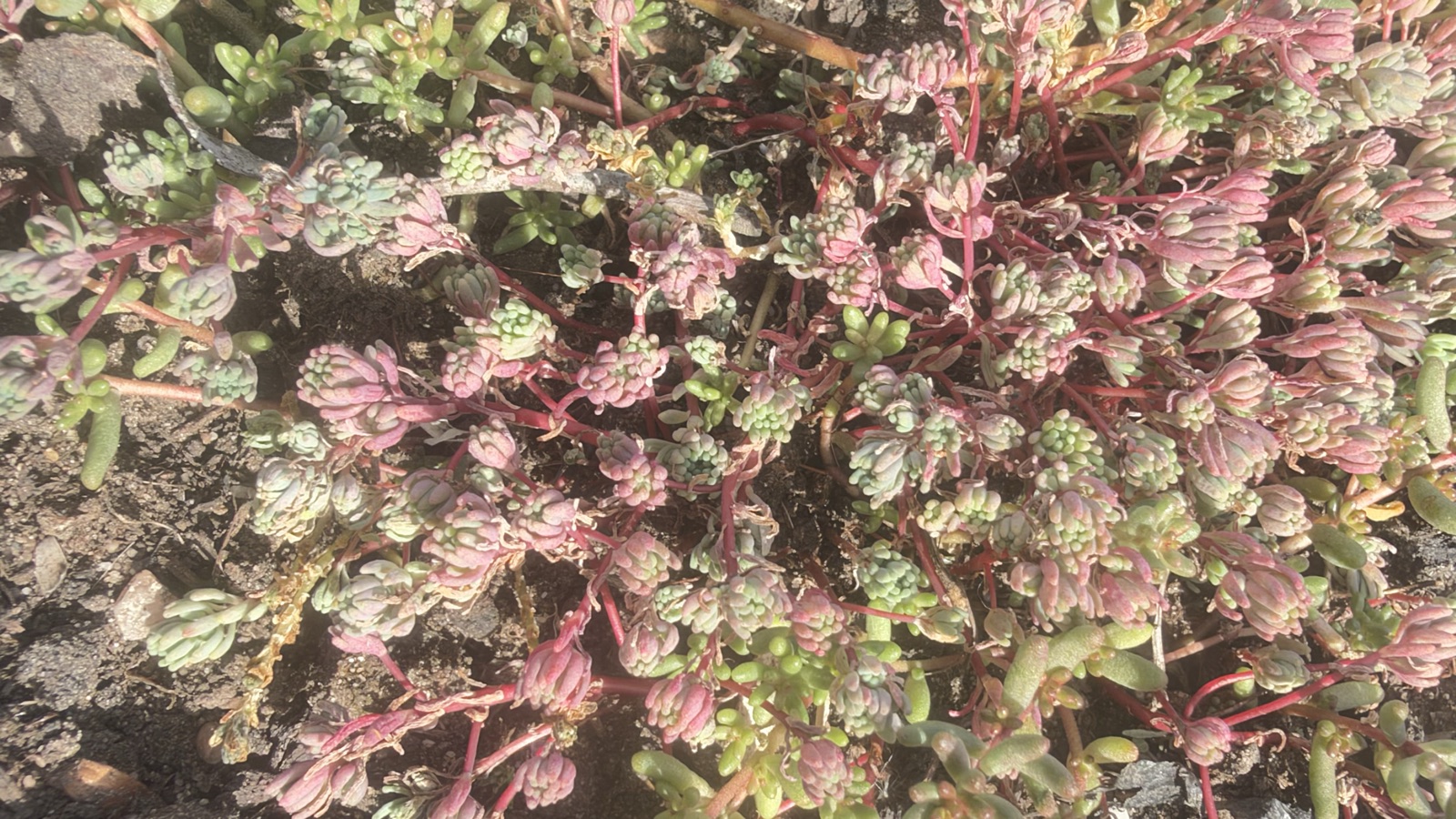
A sedum mix is the easiest way to turn a bare shed roof or a dry, awkward bank into a living carpet. Several tough stonecrops are planted together, and between them they cover the ground, flower from late spring to late summer and change colour with the seasons.
Mixes are sold as individual plants and plugs, or as pre-grown trays that give instant cover. This guide covers establishing either on a roof or at ground level, getting the watering right in that first season, keeping weeds and gaps in check, and what to expect as the mix settles and sorts itself out over the years.
Sedum mix for green roofs and ground cover at a glance
- Botanical name A blend of several hardy Sedum species, the exact selection varies between our standard and deluxe mixes
- Common name Stonecrop mix, green roof sedum, sedum matting
- Plant type Evergreen and semi-evergreen low, mat-forming succulent perennials
- Hardiness The hardy species used in green roof mixes are typically RHS H7 (below -20C)
- Height and spread Foliage mostly 5 to 15cm tall, flowers to about 20cm, spreading to form a continuous mat
- Flowering May to August, with yellow, white and pink starry flowers opening in waves
- Foliage Mixed greens, blue-greys and golds in summer, turning red, bronze and purple in cold or dry weather
- Position Full sun to light shade
- Soil Shallow, low-nutrient, very free-draining substrate or gritty soil
- Good for Shed, bike store and log store roofs, banks, gravel gardens, ground cover and pollinators
What goes into a sedum mix
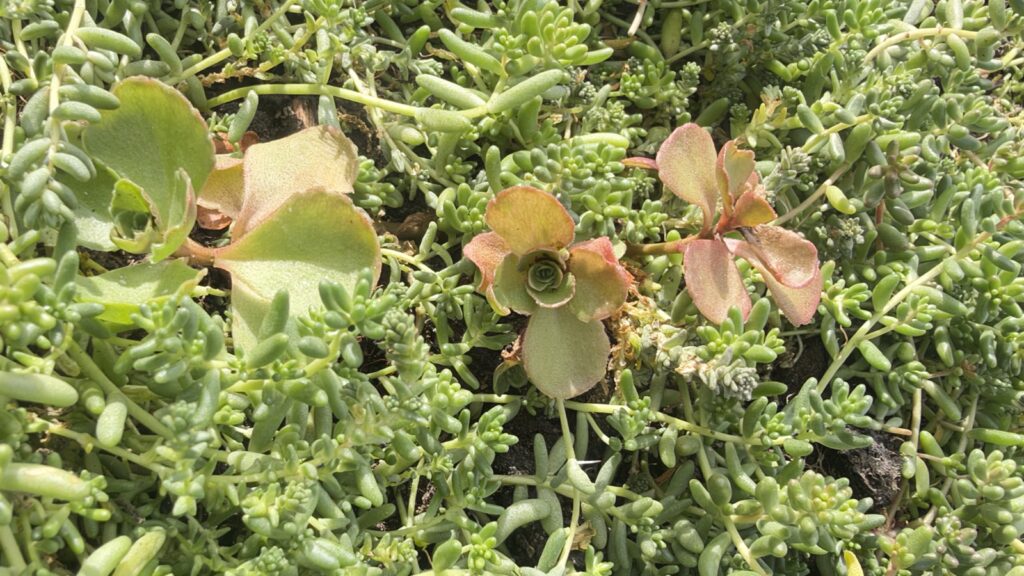
Green roof blends rely on a small group of stonecrops that cope with shallow soil, drought, frost and wind. Typical ingredients include white stonecrop (Sedum album), biting stonecrop (Sedum acre), Caucasian stonecrop (Sedum spurium), reflexed stonecrop (Sedum rupestre) and Sedum sexangulare, with taller types such as Sedum kamtschaticum in some blends.
Our standard and deluxe mixes differ in their exact selection, so check the product listing for what is in each, but both are built from fully hardy species. Each species fills a slightly different niche, which is what makes a mix more reliable than a single variety.
Preparing a roof or a patch of ground
On a roof, sedums need a waterproof membrane, a drainage layer and around 5 to 10cm of light, gritty growing substrate with only a small amount of organic matter. Check the roof can carry the saturated weight first. Our step-by-step guide to adding a green roof to a shed, bike store or log store explains the layers and edging in detail.
For ground cover, clear every scrap of perennial weed, particularly couch grass and bindweed, before you plant, as they are very hard to pull out of a sedum mat later. Heavy soil benefits from a few centimetres of grit worked into the top layer, and a gravel mulch helps on clay.
Planting plugs or laying trays
Spring and early autumn are the best times to plant, when the ground is warm and rain is likely. Avoid midsummer heatwaves unless you can water daily.
Plugs are economical and give you control over the pattern. Trays and mats cost more but look finished on day one and resist weeds from the start.
- Plant plugs about 15 to 25cm apart, roughly 16 to 25 per square metre, mixing species so no colour forms a large block.
- Firm each plug so its root ball is in full contact with the substrate.
- Butt trays tightly together with no gaps, as exposed edges dry out fastest.
- Scatter any loose sedum fragments over bare patches, where many will root.
Watering in the first season
Newly planted sedums have shallow roots and dry out quickly on a roof, where sun and wind act together. For the first four to six weeks, water whenever the top of the substrate is dry, which may be every two or three days in warm weather.
Through the rest of the first growing season, give a thorough soak once a week during dry spells. After that, an established mix lives on rainfall and only needs help in a prolonged summer drought. On the dry Lincolnshire coast, a few long soaks in a hot July can save a lot of patching later.
A light hand with feeding
Sedums colour up and stay compact on lean rations, so too much fertiliser produces soft, sprawling growth and invites grass and weeds. A single light application of a slow-release, low-nitrogen fertiliser in spring is enough, at about half the rate recommended for borders.
On a mature roof with good cover, feeding every other year is often plenty. If the mat looks yellow and thin across the whole area, rather than red from drought, a light feed in April usually brings it back.
Weeding and patching gaps
Check the mat in spring and again in autumn. Pull out grasses, clover, dandelions and especially tree seedlings such as birch, sycamore and buddleia, whose roots can damage a roof membrane if they are left to grow.
Bare patches are easy to repair. Pinch 3 to 5cm sprigs from a dense area, press them into the gap and water them in. They root within a few weeks in spring or early autumn and help keep weeds from seeding into the space.
Colours through the year and how a mix settles
Expect the mat to change. In summer it is mostly green and grey, with yellow flowers on Sedum acre in early summer followed by white Sedum album and pink Sedum spurium. Cold winters and dry spells turn many species red, bronze or purple, and that colouring is a sign of stress the plants recover from, not damage.
Over two or three years a mix also rebalances. The species best suited to each spot gradually spread while others retreat, so sunny, shallow areas often favour white and biting stonecrop, while slightly deeper or shadier patches suit Caucasian stonecrop. This self-sorting is normal and is why a mix gives good cover where a single species might fail.

Wildlife, footfall and safety
A flowering sedum roof is busy with bees, hoverflies and butterflies through the summer, and the mat gives shelter to beetles and spiders. Sedums tolerate only occasional light footfall, so use stepping stones if you need a route across ground cover.
Sedum acre in particular contains compounds that can irritate the mouth and stomach if eaten, so discourage children and pets from nibbling. Wear gloves if you have sensitive skin when handling large quantities.
Questions about Sedum mix for green roofs and ground cover
How long does a sedum mix take to cover a roof?
Pre-grown trays give near-complete cover straight away. Plugs at around 20 per square metre usually knit together within one to two growing seasons, faster with watering in the first summer and planting in spring.
Why has my sedum roof turned red?
Red, bronze and purple tones are a natural response to cold, drought or strong sun. The plants usually green up again with rain and warmer weather. Only worry if the leaves turn brown, shrivelled or mushy, which points to severe drought or waterlogging.
Do sedum green roofs need watering?
Yes in the first season, while roots establish. After that, an established mat survives on rainfall and only needs a soak during a long summer drought.
Can I walk on sedum ground cover?
Only occasionally. The fleshy stems bruise and break under regular footfall, so lay stepping stones where you need a path. Damaged patches regrow from fragments in a few weeks.
A sedum mix gives you a roof or bank that flowers, feeds pollinators and changes colour through the year for very little effort. See the individual stonecrops that go into our blends in the sedum collection.