
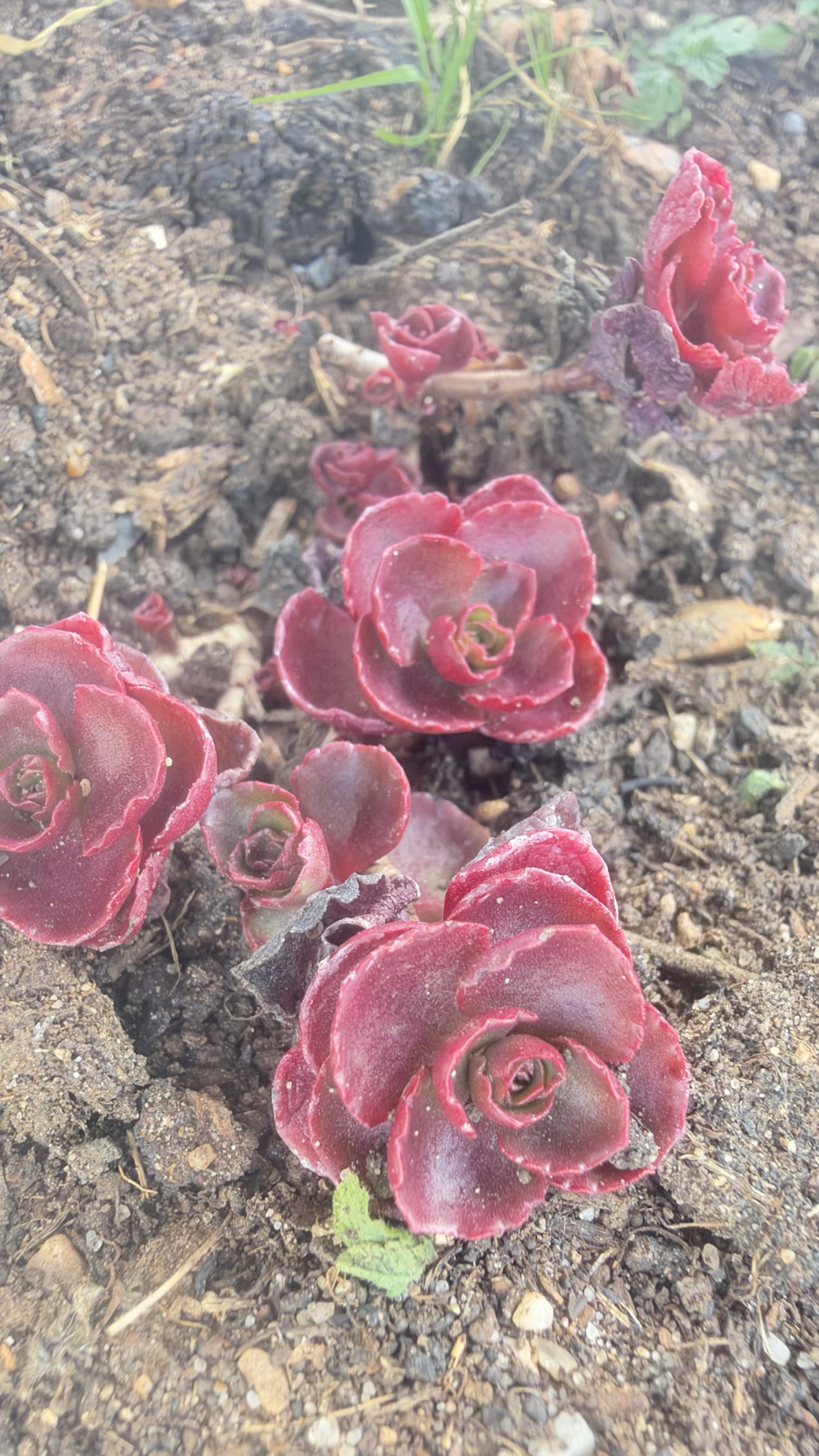
Few low plants colour up like Sedum spurium 'Dragon's Blood'. Its small, scalloped leaves open green edged with purple, then darken through summer to a rich wine red, and in July and August the mat is covered in deep pink, star-shaped flowers that bees work over for weeks.
It also carries the RHS Award of Garden Merit and the top hardiness rating, so it is one of the easiest stonecrops you can grow in Britain. Below you will find how to plant it, how to keep the red at its deepest, simple trimming and propagation, plus ideas for slopes, walls and roofs.
Sedum spurium 'Dragon's Blood' at a glance
- Botanical name Sedum spurium 'Schorbuser Blut', also listed as Phedimus spurius 'Dragon's Blood'
- Common name Dragon's Blood stonecrop, Caucasian stonecrop, two-row stonecrop
- Plant type Mat-forming, mostly evergreen succulent perennial
- Hardiness RHS H7 (below -20°C)
- Height and spread About 10cm tall, spreading 30 to 50cm
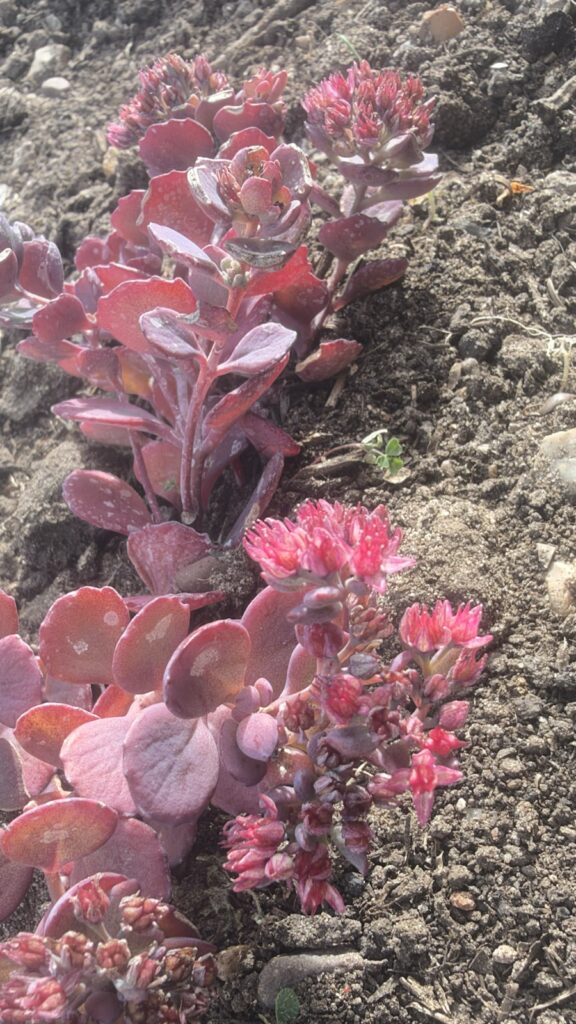
- Flowering Deep reddish-pink starry flowers in flat clusters, July to August
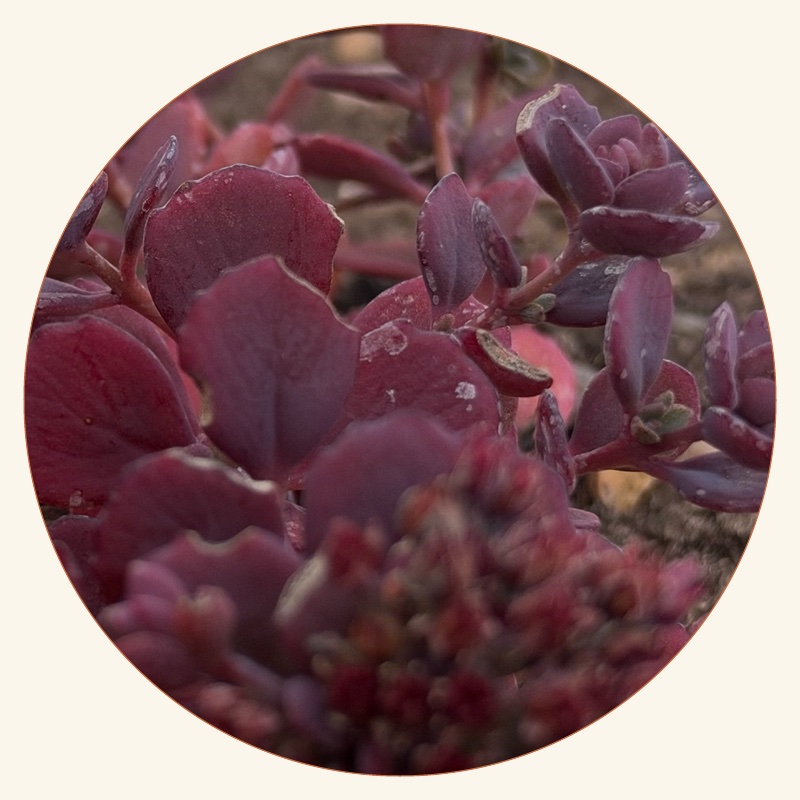
- Foliage Rounded, scalloped leaves, green with purple tints in spring, deepening to burgundy red in sun and cold
- Position Full sun for the best colour, tolerates light shade
- Soil Any well-drained soil, acid, neutral or alkaline
- Good for Ground cover, slopes, wall tops, green roofs and pollinators
Sun brings out the red
Foliage colour depends almost entirely on light. In full sun the leaves turn dark burgundy by midsummer, while in partial shade they stay mostly green with a purple flush and the stems grow looser. Aim for at least six hours of direct sun if the red is what you are after.
Hot, dry places that defeat other ground covers suit it well, such as south-facing banks, gravel drives, the top of a retaining wall or the gaps in a sunny patio edge.
Planting in the ground and in pots
Dragon's Blood is relaxed about soil type and will grow in sand, loam or chalk, acid or alkaline. What it will not tolerate is standing water, so on heavy clay add plenty of grit or plant on a slight mound. Spring and early autumn are the best times to plant, spacing plants about 25 to 30cm apart for a mat that closes up in a season or two.
In containers, use a gritty, peat-free compost and a pot with good drainage holes. A wide, shallow bowl shows off the trailing stems better than a deep pot, and it looks handsome tumbling over the edge of a raised bed.
Watering and feeding
Water new plants weekly for their first month, then leave them alone. Established mats in the ground cope with long dry summers, including the low rainfall of eastern counties, without help. Pots need a drink only when the compost has dried right through.
Skip the fertiliser. Feeding makes the growth sappy and green and washes out the red you planted it for. Poor, stony soil gives the tightest, darkest mats.
Trimming and keeping it neat
This is a vigorous spreader, which is useful for covering ground but means it can smother slow alpines planted too close. Give it room or pair it with tough neighbours.
- Shear off faded flower heads in late August or September to keep the mat tidy.
- Cut back stems that creep over paths or into other plants at any time from spring to autumn.
- Pull out any shoots that revert to plain green, as they grow faster than the red stems.
- Lift and divide old mats that have gone bare in the centre every three to four years.
What happens in winter
Rated H7, Dragon's Blood shrugs off any UK frost. In a hard winter it may shed some older leaves and look thin, keeping tight red rosettes at the stem tips, then fills out again quickly once spring warms up. Do not be tempted to cut it back hard in autumn, as those rosettes are next year's growth.
The only real winter enemy is waterlogging. On soggy ground the stems can rot at the base, so clear fallen leaves off the mat in autumn to stop them holding moisture against it.
Growing more Dragon's Blood
It is one of the simplest plants to multiply. Divide clumps in spring by lifting a section with a trowel and replanting it straight away, or take short softwood cuttings in early summer and push them into gritty compost.
Broken stems often root on their own where they touch the soil, which is why bare patches fill in so quickly. You can scatter chopped stem pieces over prepared ground and lightly press them in to start a new mat.
Slopes, walls and roofs
The dense roots hold soil on banks that are hard to mow, and the colour reads well from a distance. Dragon's Blood is also a mainstay of sedum roof mixes because it is shallow-rooted and drought-proof, and its red contrasts with the greens and yellows of other stonecrops. Our guide to adding a green roof to a shed or log store shows how to build one.
For planting partners, try blue fescue, silver-leaved thyme, golden Sedum rupestre forms or houseleeks. Purple and grey foliage around it makes the red glow, and the summer flowers bring bees and butterflies into a dry corner.
Pests, problems and pets
Slugs and snails may nibble young shoots in spring, and vine weevil grubs occasionally attack plants in pots. Root rot is the usual cause of sudden dieback and almost always traces back to wet, heavy soil.
Sedum spurium is generally considered low risk around children and pets, though eating any garden plant can cause a mild upset stomach.
Questions about Sedum spurium 'Dragon's Blood'
Why is my Dragon's Blood sedum not red?
Too much shade or too much feeding are the usual causes. Move it to full sun and stop using fertiliser, and the leaves should darken within a season. New spring growth is naturally greener before turning red in summer.
Is Dragon's Blood sedum invasive?
It spreads quickly by creeping stems, but the roots are shallow and unwanted pieces pull up easily. Keep it away from small alpines it could swamp, and trim the edges once or twice a year.
Does Dragon's Blood sedum die back in winter?
It usually keeps tight red rosettes at the stem tips but can drop older leaves in a cold winter. The mat refills quickly in spring, so there is no need to cut it back.
Can you walk on Dragon's Blood sedum?
Only occasionally. It takes light foot traffic between stepping stones but will bruise and thin if walked on regularly.
Dragon's Blood is one of the toughest plants we grow on our Lincolnshire farm, and it pairs well with almost anything in our range of drought-tolerant plants. Pick up a few and you will have a red carpet across a dry bank or roof within a couple of summers.