
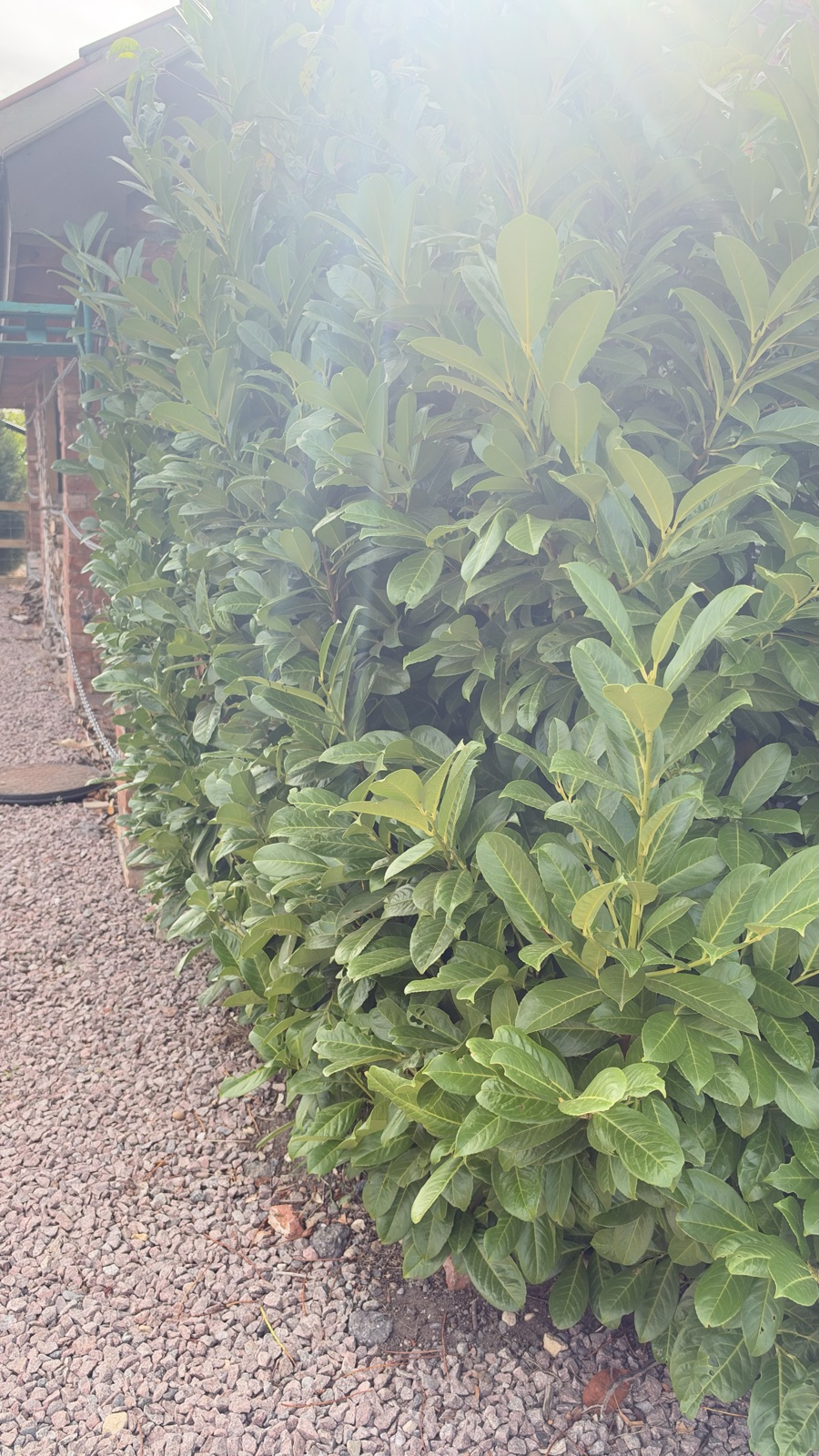
Cherry laurel is the go-to choice when you want a thick, green screen quickly. It grows fast, keeps its glossy leaves all winter, copes with shade under trees and forgives the odd heavy-handed trim.
This guide covers planting a new hedge, watering, trimming and renovation, along with the leaf problems you may come across. Because the leaves and seeds are poisonous, we also explain how to handle the plant and its clippings safely.
Prunus laurocerasus, cherry laurel at a glance
- Botanical name Prunus laurocerasus
- Common name Cherry laurel, common laurel, English laurel
- Plant type Fast-growing evergreen shrub, widely used for hedging
- Hardiness RHS H5 (hardy, -10 to -15°C)
- Height and spread Can reach 8m tall and wide if left untrimmed, usually kept as a hedge 1.5 to 4m tall, growing 30 to 60cm a year
- Flowering Upright spikes of small, scented white flowers in April and May, followed by red cherries that ripen to black
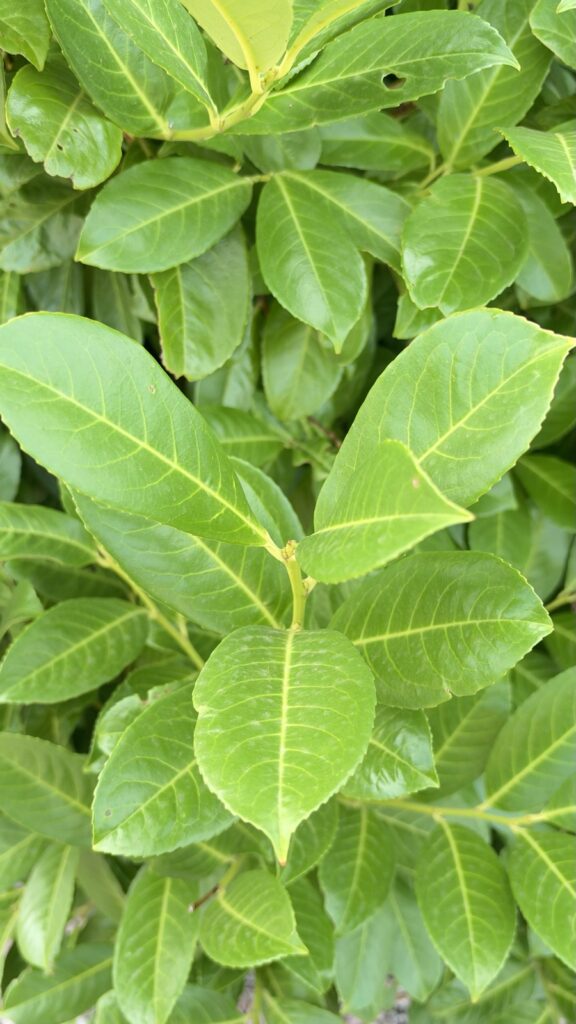
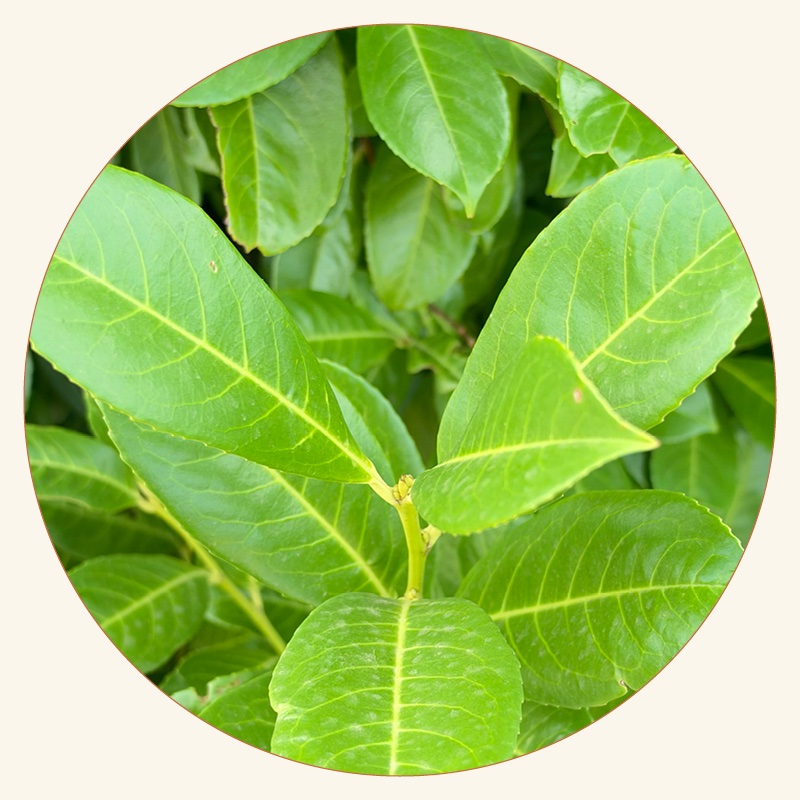
- Foliage Large, glossy, leathery dark green leaves all year round
- Position Full sun to full shade
- Soil Most moist but well-drained soils, dislikes waterlogging and shallow chalk
- Good for Fast privacy hedges, screening, shady boundaries, shelter for birds
Is laurel the right hedge for you
Laurel suits anyone who wants height and privacy within a few years. Planted at around 60 to 90cm tall, a hedge can reach 1.8m in three to four years with good care. It will grow in sun or deep shade and on most soils, from clay to sand.
The trade-off is vigour. Laurel needs trimming at least once a year, its big leaves suit larger gardens better than tiny plots, and it is toxic, which matters if livestock graze next to your boundary.
Planting a new laurel hedge
Pot-grown plants can go in at any time the soil is workable, while bare-root plants are available from November to March. Autumn planting gives roots the longest time to settle before summer.
- Clear a strip about 60cm wide of grass and weeds and dig in some compost.
- Space plants 60 to 90cm apart in a single row, closer for a quicker screen.
- Plant at the same depth they grew in the pot or nursery, then firm the soil around them.
- Water each plant with a full can straight after planting.
- Mulch the row with bark or compost to hold in moisture and smother weeds.
Watering through the first two summers
New hedges fail most often from drought, particularly on light soils and in the dry east of England. For the first two growing seasons, soak the root zone once or twice a week in dry weather. A seep hose laid along the row makes this easy.
Once established, laurel copes with dry spells well, although yellowing or dropped leaves in a hot summer are a sign it would appreciate a deep drink.
Feeding
Laurel rarely needs much feeding. Scatter a general-purpose fertiliser or pelleted chicken manure along the hedge line in spring to help young plants put on growth.
On very poor or sandy soil, a yearly mulch of well-rotted compost keeps established hedges green and dense.
Trimming for a dense, tidy hedge
Trim once a year in late summer, or twice if you want a crisp shape, with a light trim in spring and a second in late summer. Always check for nesting birds first, as it is an offence to disturb an active nest, and the main nesting season runs from March to August.
Large leaves cut in half by a hedge trimmer go brown at the edges and look scruffy. Secateurs give the neatest finish on small hedges, cutting each stem just above a leaf. On longer hedges, use a sharp trimmer and accept a brief period of browning.
Renovating an overgrown laurel
Laurel regrows well from old wood, so even a hedge that has got out of hand can be rescued. Cut back hard in early spring, before birds start nesting, reducing height and width by up to half.
For a very large hedge, spread the work over two or three years by cutting one side and the top first, then the other side the following year. Feed, water and mulch well afterwards to support the new shoots.
Leaf spots, holes and yellowing
Small round holes in the leaves are usually shot hole, where the plant sheds patches of tissue damaged by bacterial or fungal leaf spot. It looks worse than it is, so remove badly affected shoots and keep plants well watered and fed.
Powdery mildew sometimes coats soft new growth with a white film after trimming, and yellowing leaves often point to waterlogged roots or drought stress. Improving drainage or watering more consistently usually fixes the problem.
Handling laurel and its clippings safely
The leaves and seeds of cherry laurel contain cyanogenic glycosides, which release hydrogen cyanide when the tissue is crushed or chewed. Never eat any part of the plant, keep children away from the cherries and stones, and do not let livestock or horses browse the hedge or clippings.
Freshly crushed leaves give off a faint almond smell, a sign of the gas being released, so take sensible precautions when cutting and disposing of large amounts.
- Wear gloves when trimming and wash your hands afterwards.
- Shred clippings outdoors in open air, never in a shed, garage or other enclosed space, and avoid leaning over the shredder.
- Do not burn laurel clippings, as the smoke can be irritating and harmful to breathe.
- Avoid carrying bags of fresh clippings in a closed car for long trips.
- Take large quantities to your council green waste collection or recycling centre rather than piling them where animals can reach.
Questions about Prunus laurocerasus, cherry laurel
How fast does cherry laurel grow?
Established plants typically put on 30 to 60cm a year in reasonable soil with enough water. Young hedges grow most quickly once their roots have settled after the first season.
When is the best time to cut a laurel hedge?
Late summer, after the main bird nesting season, is ideal for an annual trim. Hard renovation pruning is best done in early spring before birds begin nesting.
Is cherry laurel poisonous to dogs?
Yes, the leaves and seeds are toxic to dogs, cats and people, as well as horses and farm animals. Most animals find the leaves unpalatable, but contact a vet straight away if you think your pet has eaten any.
Can you compost laurel clippings?
Small amounts mixed well with other garden waste can be composted, as the compounds break down as the material rots. Large volumes are better sent to council green waste collections.
A well-planted laurel hedge gives privacy and year-round greenery for decades with just an annual trim. To find shrubs for hedging and borders, have a look through our shrubs collection.