
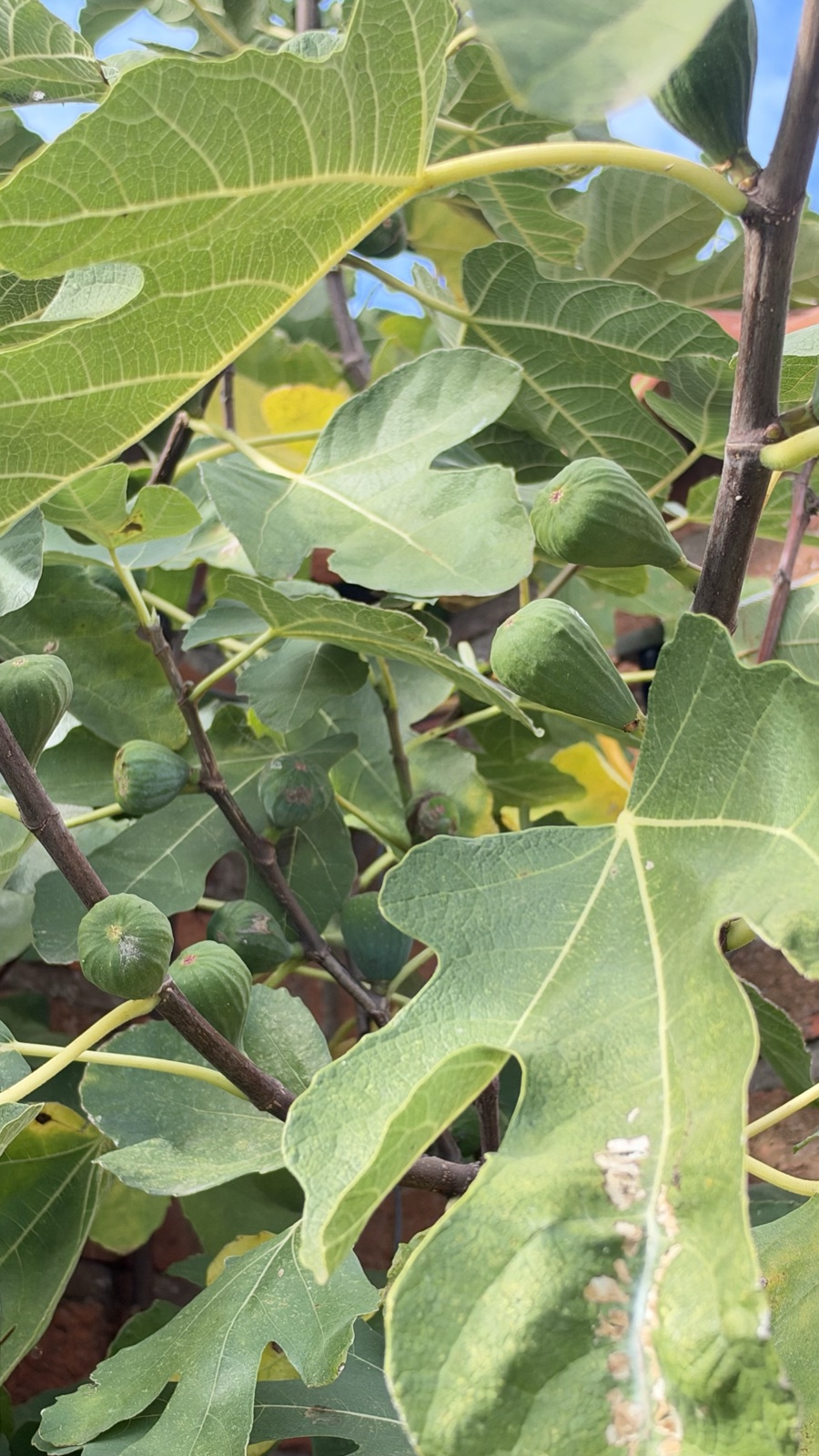
Picking a warm, ripe fig from your own tree is one of the small joys of a British summer, and 'Brown Turkey' is the variety most likely to make it happen. It is reliable, self-fertile and among the hardiest figs, with sweet purple-brown fruit and handsome architectural leaves.
Figs grow differently from apples or plums, so a little understanding goes a long way. This guide explains why you should restrict the roots, how fruit forms in a UK climate, when to prune, how to protect the tree in winter and how to stay safe from its irritant sap.
Fig 'Brown Turkey' at a glance
- Botanical name Ficus carica 'Brown Turkey'
- Common name Common fig, Brown Turkey fig
- Plant type Deciduous fruiting shrub or small tree, RHS Award of Garden Merit
- Hardiness RHS H4 (down to about -10°C), young figs and shoot tips can be damaged by hard frost
- Height and spread 2.5 to 4m tall and wide over 10 to 20 years, much smaller with root restriction or in a pot
- Flowering Flowers are hidden inside the developing fruit, no pollination needed in the UK
- Foliage Large, deeply lobed, rough green leaves, turning yellow before falling in autumn
- Position Full sun, sheltered, ideally against a south or west-facing wall
- Soil Well-drained, moderately fertile soil, roots should be restricted
- Good for Homegrown fruit, wall training, large patio pots, Mediterranean-style gardens
A sunny, sheltered home
Figs need heat to ripen their fruit, so choose the warmest spot you have. A south or west-facing wall is ideal, as the brickwork stores heat and gives shelter from cold winds. Freestanding trees crop well in southern and coastal gardens and in sunny city plots.
'Brown Turkey' is rated RHS H4, so the tree itself survives most UK winters. The weak point is the tiny overwintering figs and soft shoot tips, which a hard frost can kill even when the main branches are unharmed.
Why roots need restricting
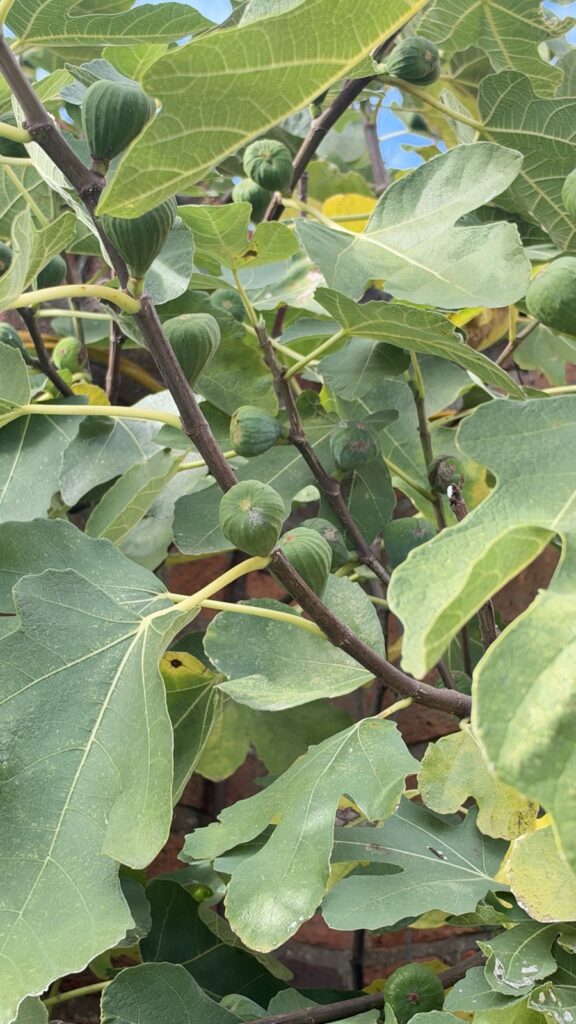
Given free root run in rich soil, a fig puts its energy into leafy growth and produces very little fruit. Confining the roots keeps the tree compact and pushes it to crop instead.
The traditional method is a planting pit about 60cm square and 60cm deep, lined on the sides with paving slabs set just proud of the soil surface. Put 20cm of broken brick or rubble in the base for drainage, then backfill with soil mixed with a little grit. Alternatively, plant in a large container, which restricts roots in the same way.
Growing figs in pots
Brown Turkey does very well in a pot of 45 to 60cm across, filled with loam-based compost. Pot-grown figs are easy to move into a cold greenhouse or against the house in severe weather, which protects the next year's crop.
Containers dry out quickly, and a fig that runs dry in summer will drop its fruit. Water daily in hot spells and give a high-potash feed, such as tomato fertiliser, every two weeks from spring until the fruit starts to ripen. Repot or top-dress with fresh compost every couple of years.
How figs fruit in a British summer
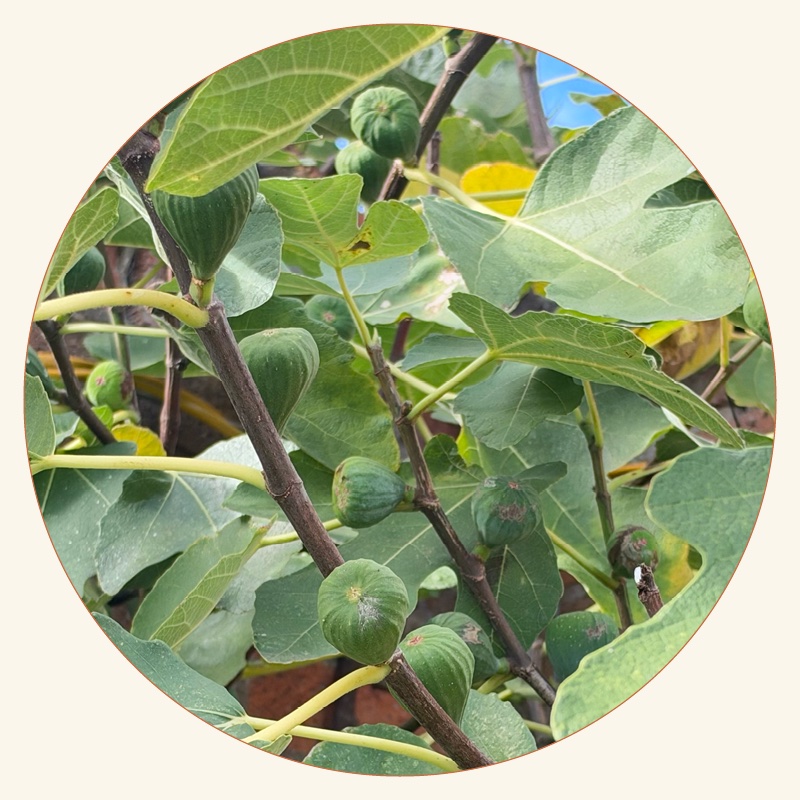
In warm climates figs produce two or three crops a year, but outdoors in the UK only one ripens. These are the pea-sized embryo figs that form at the shoot tips in late summer, survive the winter and swell to ripen the following August and September.
Any larger, green figs still on the tree in late autumn will not ripen and may rot, so pick them off in October or November. This directs the tree's energy into the tiny embryo fruits that will become next year's harvest. Ripe figs hang down, soften and may split slightly at the base.
Pruning for fruit
Prune figs twice a year, wearing gloves and long sleeves because of the sap.
- In late winter or early spring, remove dead, damaged or crossing branches and any frost-killed tips.
- At the same time, cut a few older shoots back to one bud to encourage fresh fruiting growth.
- In early summer, pinch out the tips of new shoots at five or six leaves to encourage embryo figs to form.
- On wall-trained fans, tie in well-placed shoots and remove those growing towards or away from the wall.
Winter protection
In colder areas, and in hard winters elsewhere, wrap freestanding or wall-trained trees in a double layer of horticultural fleece, or pack straw around the branches, from late autumn. The aim is to protect the embryo figs at the shoot tips.
Remove the covering in spring once the worst frosts are past. Move pots into a cool, frost-free shed or greenhouse, keeping the compost only just moist while the tree is dormant.
Sap safety and pets
Fig sap is a milky latex that irritates skin. It contains compounds that react with sunlight, and contact followed by sun exposure can cause painful redness and blistering known as phytophotodermatitis, sometimes leaving marks that last for months.
Always wear gloves and long sleeves when pruning or handling cut stems, and wash any sap off your skin promptly. Fig leaves and sap can also cause skin and stomach irritation in dogs and cats, so clear away prunings where pets roam.
Pests and problems
Birds, wasps and squirrels compete for ripe figs, so netting the tree or bagging individual fruits in mesh helps you get there first. Fruit drop is usually caused by dry roots. Coral spot can enter through damaged branches, and under glass red spider mite and scale insects may appear. For other sun-loving plants that share the fig's taste for warmth, see our drought-tolerant plants.
Questions about Fig 'Brown Turkey'
Why is my Brown Turkey fig not producing fruit?
The most common causes are unrestricted roots, too much feeding or a shady site, all of which encourage leaves instead of fruit. Hard frosts can also kill the embryo figs over winter. Restricting the roots and giving full sun usually solves the problem.
When are Brown Turkey figs ready to pick?
In the UK they usually ripen from August into September. A ripe fig turns purple-brown, feels soft, hangs downwards on its stalk and may show a small split or a drop of nectar at the base.
Do Brown Turkey figs need a pollinator?
No. Brown Turkey is a common fig that sets fruit without pollination, so a single tree will crop on its own. The fig wasp that pollinates some types does not live in the UK and is not needed.
Can a fig tree damage house foundations?
An unrestricted fig can develop large, vigorous roots, which is one reason root restriction is recommended near buildings. A slab-lined pit or a container keeps the roots contained and the tree a manageable size.
With a warm wall, restricted roots and a little pruning, 'Brown Turkey' can give you baskets of sweet homegrown figs for years. Take a look at our trees collection to find a fig ready to plant.