
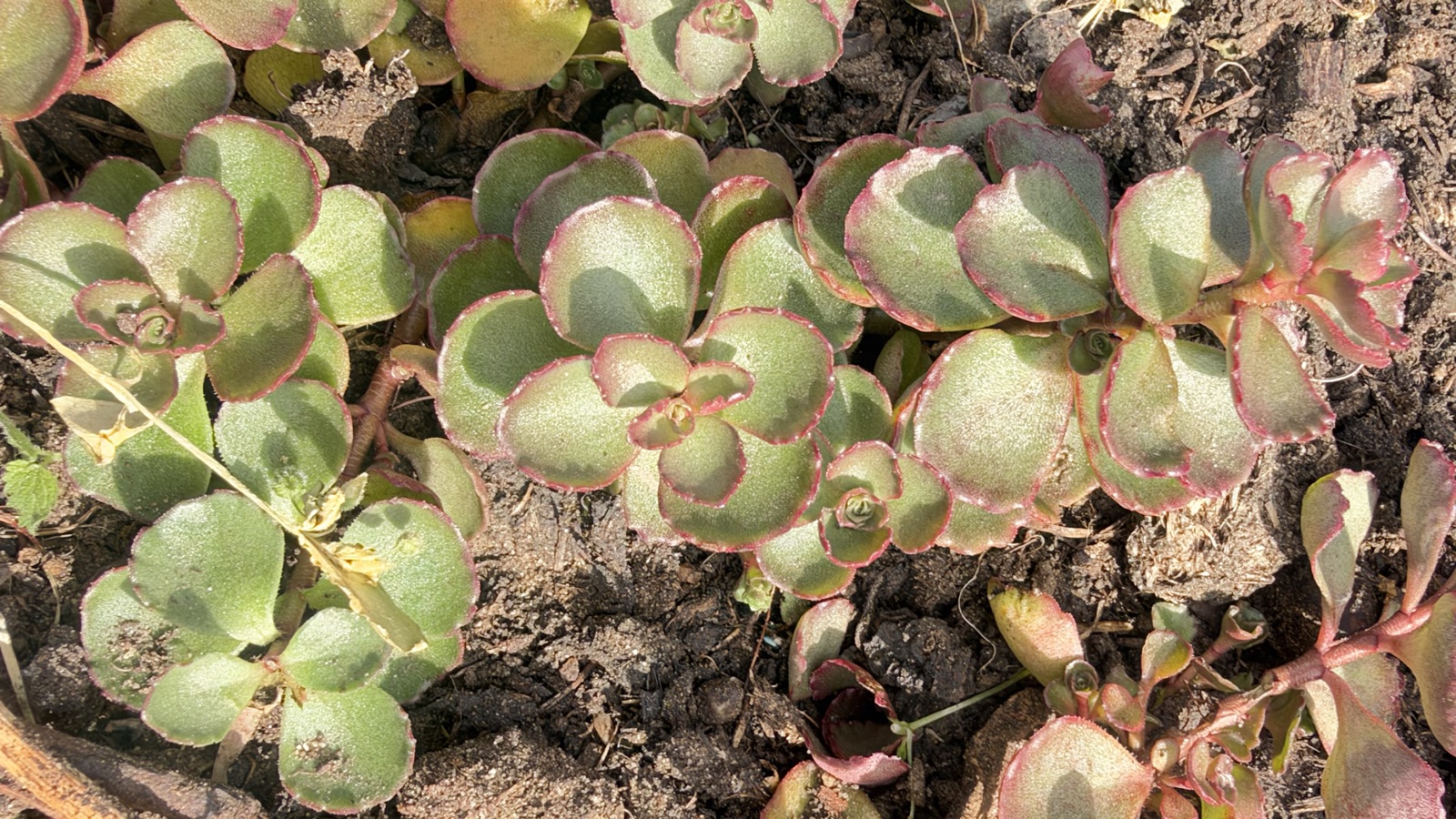
Sedum 'Rose Carpet' is often assumed to be a form of Sedum spurium, but it is not. The RHS lists it as Hylotelephium ewersii var. homophyllum 'Rosenteppich', a compact relative of the tall border sedums, with neat grey-green leaves and generous domes of rose-pink flowers from midsummer into early autumn.
Knowing that matters for its care, because it behaves differently from a creeping spurium. This guide explains how it grows through the year, where to plant it, watering and cutting back, dividing it, the few problems it meets and which plants make good companions.
Sedum 'Rose Carpet' at a glance
- Botanical name Hylotelephium ewersii var. homophyllum 'Rosenteppich', synonyms Sedum 'Rose Carpet', Sedum pluricaule 'Rose Carpet', Sedum cauticola 'Rose Carpet'
- Common name Rose Carpet stonecrop, Ewers' stonecrop
- Plant type Low, clump-forming deciduous succulent perennial
- Hardiness RHS H6 (down to about -20 to -15°C)
- Height and spread Around 10 to 15cm tall, spreading 30 to 40cm
- Flowering Domed heads of rose-pink starry flowers up to 10cm across, July to September
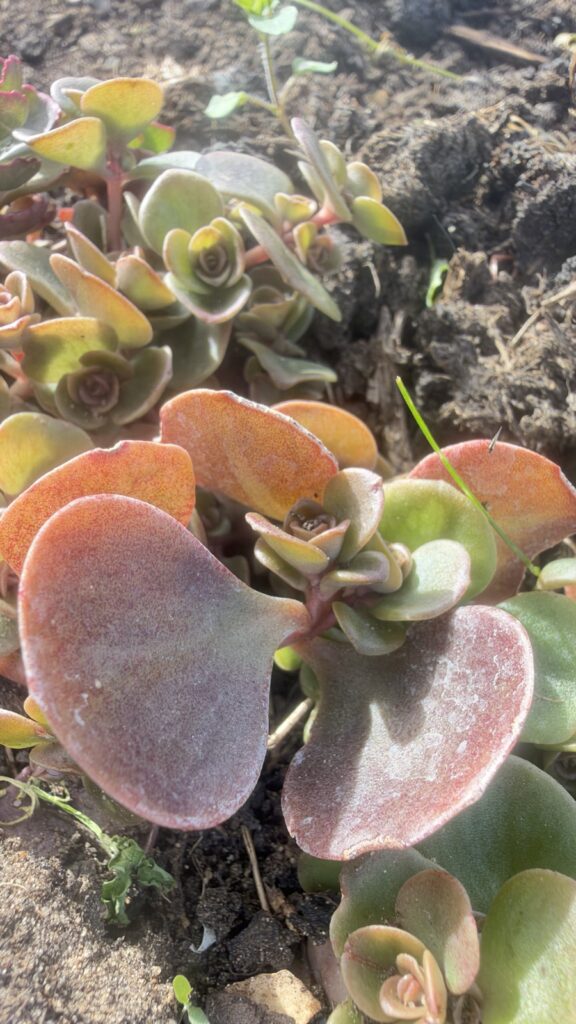
- Foliage Rounded, fleshy grey-green leaves up to 2cm across, dying back in winter
- Position Full sun
- Soil Well-drained chalk, loam or sand, neutral to alkaline
- Good for Rockeries, troughs, front of borders, wall tops and late pollinators
Not a spurium, and why that matters
The confusion is understandable, since nurseries sell it under several names, including Sedum pluricaule and Sedum cauticola 'Rose Carpet'. It is easily muddled with Sedum spurium 'Roseum' too, which is a different, evergreen creeping plant with green, bronze-flushed leaves.
Rose Carpet is clump-forming and deciduous. Rather than racing across the ground, it builds a tidy cushion of rounded grey-green leaves on short, arching stems, then retreats to small buds at ground level in winter. That makes it a much better neighbour for slow alpines than a vigorous spurium.
The best place to plant it
Give it full sun and sharp drainage. It is at home in a rockery pocket, along the top of a dry stone wall, in an alpine trough or at the very front of a sunny border where the flower heads can lean over a path.
Rated H6 by the RHS, it is fully hardy across the UK, so exposure is not a problem. Shade is, because it leads to floppy stems and far fewer flowers.
Soil preparation and planting
Chalky, sandy or loamy soils that drain freely all suit it, ideally neutral to alkaline. On heavier ground, mix in grit and a little sharp sand, and finish with a gravel collar so the crown stays dry.
Plant in spring or early autumn about 30cm apart. In troughs and pots, use a gritty, peat-free compost, roughly two parts compost to one part grit, and make sure there are drainage holes.
Watering and feeding
Water regularly for the first few weeks after planting, then only during long dry spells. Established clumps cope well with drought, and even in Lincolnshire's low-rainfall summers they rarely need help in the ground. Containers need watering when the compost is dry most of the way down.
No feeding is needed in the ground. Rich soil makes the stems soft and the flower heads flop open in the middle. A single dilute feed in spring is plenty for a plant in a pot.
Cutting back through the seasons
Because it is deciduous, Rose Carpet looks quite different in each season, and a little timely tidying keeps it neat.
- In spring, look for tight grey-green buds at the base, the first sign of new growth.
- From July to September, enjoy the flowers and leave them for bees and butterflies.
- In autumn, you can leave faded heads for a russet tint or snip them off.
- In late winter, cut away the dead stems just above the new buds.
Dividing and taking cuttings
Clumps can be lifted and split every three or four years in spring, just as growth starts. Use a hand fork to ease the clump out, pull or cut it into rooted sections and replant them at the same depth.
Short stem cuttings taken in late spring or early summer root easily in gritty compost. Let the cut ends dry for a day before inserting them, and keep them only lightly moist.
Pests, problems and safety
Slugs and snails can damage emerging shoots in spring, so protect young plants as they break dormancy. Vine weevil grubs may eat roots in containers, and crown rot follows heavy, wet soil. Bare patches in winter are normal and not a sign of trouble.
Hylotelephium species are generally regarded as low risk to people and pets, though it is best to discourage anyone from eating garden plants.
Companions for Rose Carpet
The pink flowers and grey leaves look lovely with silver foliage and blue tones. Try it beside dwarf lavender, Festuca glauca, sempervivums or creeping thyme, or let it soften the edge of a gravel path. Browse our alpines collection for trough companions that share its love of sun and grit.
Because it peaks in late summer, it extends the season in a rockery after spring alpines such as aubrieta and saxifrages have finished.
Questions about Sedum 'Rose Carpet'
Is Sedum Rose Carpet evergreen?
No. It is deciduous, so the leaves and stems die back in late autumn and the plant rests as small buds at soil level. New grey-green growth appears again in spring.
When does Sedum Rose Carpet flower?
It flowers from July to September, carrying domed heads of rose-pink stars up to about 10cm across. The flowers are rich in nectar and popular with bees and butterflies.
Does Sedum Rose Carpet spread like other ground cover sedums?
Not in the same way. It forms a steadily widening clump around 30 to 40cm across rather than rooting across the ground like Sedum spurium, so it is safe beside slower alpines.
Is Sedum Rose Carpet the same as Sedum spurium Roseum?
No, they are different plants. Rose Carpet is a deciduous Hylotelephium with grey-green leaves, while Sedum spurium 'Roseum' is an evergreen creeper with green, bronze-flushed foliage.
Rose Carpet is one of the gentler stonecrops in our sedum collection, and a lovely choice if you want late flowers without a plant that takes over. Each one is grown in Metheringham and sent out ready to plant.