
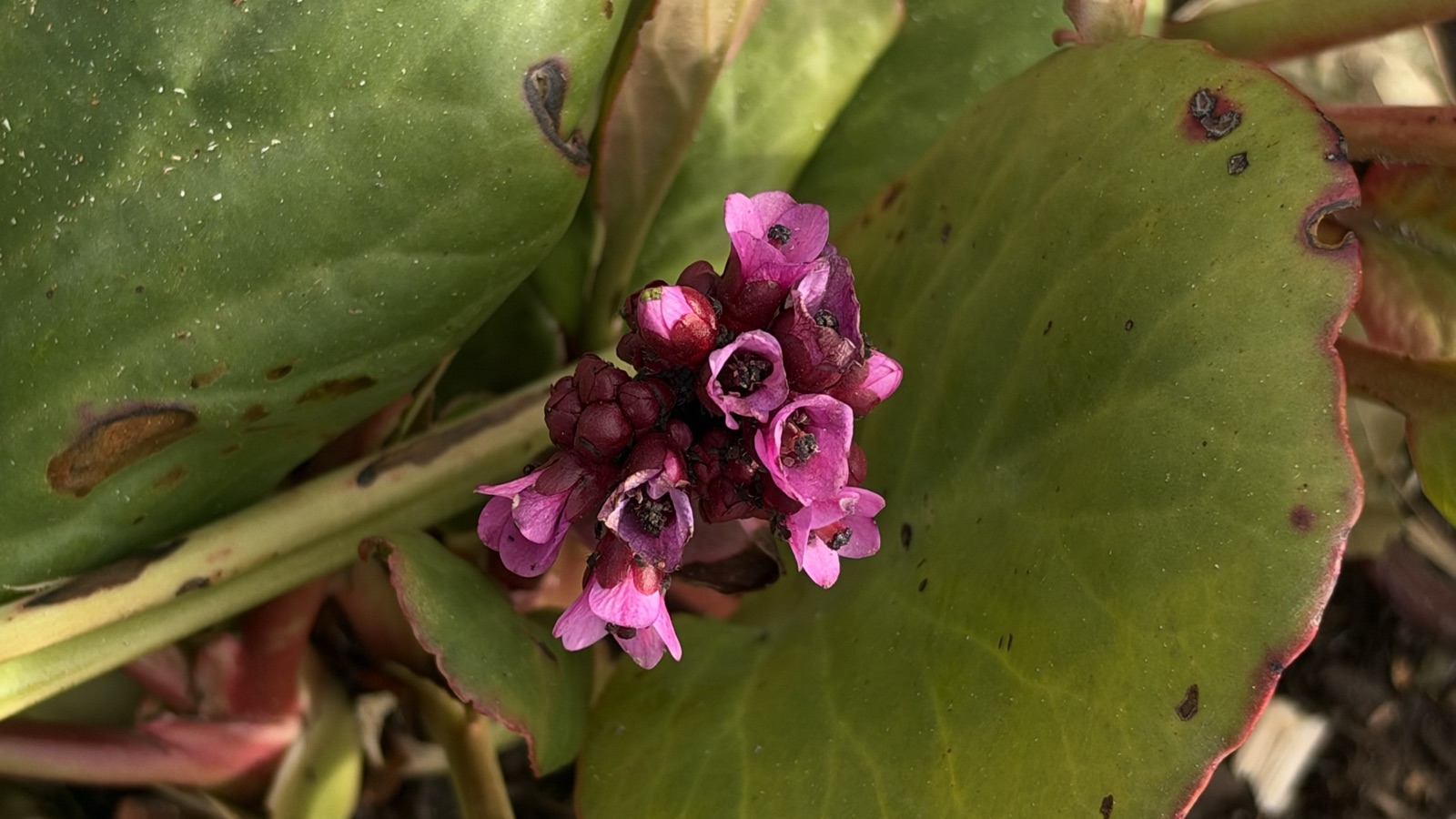
When most borders are bare, bergenia is at its best. The big, leathery leaves stay put all winter, many cultivars turn a rich beetroot red in the cold, and stout stems of pink flowers push up while frost is still on the ground.
Bergenia asks for very little, which makes it a favourite for awkward spots. This guide explains how position affects leaf colour, how to plant and tidy it, how to make new plants from old rhizomes, and how to deal with the few pests that bother it.
Bergenia, elephant's ears at a glance
- Botanical name Bergenia cordifolia, the most widely grown species, plus many hybrid cultivars
- Common name Elephant's ears, heart-leaved bergenia, pigsqueak
- Plant type Evergreen, clump-forming rhizomatous perennial
- Hardiness RHS H7 (fully hardy, below -20°C)
- Height and spread Around 30 to 45cm tall in flower, spreading 45 to 60cm
- Flowering Clusters of pink, magenta or white bell-shaped flowers on reddish stems, late winter to spring, roughly February to April
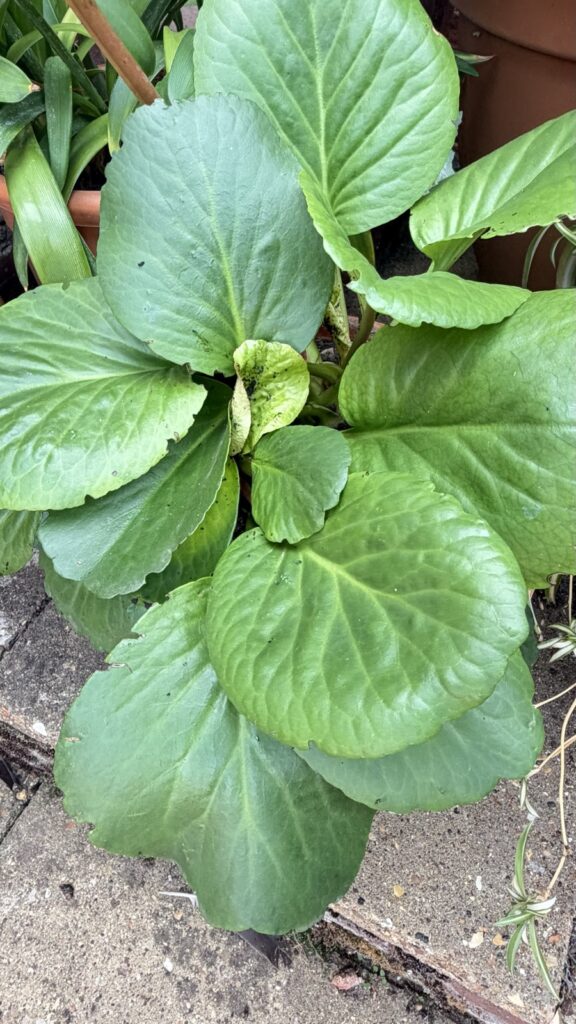
- Foliage Large, rounded, glossy leathery leaves, mid to dark green in summer, often flushing red, bronze or purple in winter
- Position Full sun to full shade, best winter colour in sun
- Soil Almost any soil including clay, chalk and dry soil, avoid permanently waterlogged ground
- Good for Ground cover, edging paths, dry shade under trees, winter interest, coastal gardens
A year-round plant that peaks in winter
The leaves are the main event. In summer they form a glossy green carpet that shades out weeds, then as temperatures drop, varieties such as 'Overture' and 'Eroica' deepen to burgundy and plum.
Flowers follow in late winter and early spring, giving early bumblebees a welcome source of nectar. The common name pigsqueak comes from the noise a leaf makes when rubbed between finger and thumb.
Sun for colour, shade for gloss
Bergenia grows almost anywhere, but position changes how it looks. In full sun and leaner soil, winter leaf colour is strongest and plants stay compact. In shade, leaves are larger and glossier but usually remain green through winter.
It is one of the few plants that copes with dry shade beneath trees and hedges once established. It also handles salty wind, so it suits coastal gardens along the Lincolnshire and Norfolk shoreline.
Planting elephant's ears
Plant at any time the ground is not frozen or baked dry, with autumn and spring being ideal. Bergenia tolerates clay, chalk and sandy soils, though very wet ground in winter can rot the rhizomes.
Space plants 40 to 50cm apart for ground cover and set the rhizome so it sits just at the soil surface. Water in well and keep moist for the first few weeks while roots settle.
Watering and feeding
Established clumps are remarkably drought-tolerant, which is why bergenia appears among our wider range of drought-tolerant plants. Water only in the first summer after planting or during a prolonged heatwave if leaves start to wilt.
Avoid rich feeding. Heavy fertiliser makes floppy, oversized leaves and dulls the winter colour. A thin mulch of compost in spring is all a border plant needs.
Spring and autumn tidying
Individual leaves last a couple of years before browning. Pull or snip away tatty, brown or torn leaves at the base in early spring before new growth starts, and again in autumn if needed.
Cut flower stems down once the blooms fade. Over time the rhizomes creep across the surface and become bare in the middle, which is a sign the clump is ready to divide. Lift and replant the healthiest outer pieces, discarding the woody, leafless centre.
Making new plants from rhizomes
Bergenia is one of the easiest perennials to propagate. Divide clumps every three to five years in spring after flowering or in early autumn.
- Lift the clump with a fork and shake off loose soil.
- Cut the rhizome into pieces 5 to 10cm long, each with at least one leaf rosette and some roots.
- Pot up small pieces in gritty compost or replant larger ones straight into the border.
- Leafless rhizome sections laid horizontally in trays of compost will also sprout new shoots.
Vine weevil, slugs and leaf spot
Notched leaf edges are the calling card of adult vine weevils. The real damage is done by their white grubs, which eat the roots, especially in pots. Apply nematodes in late summer or check plants by torchlight and remove the beetles.
Slugs and snails sometimes graze the flowers and young leaves. In damp, crowded conditions a fungal leaf spot can appear as brown blotches, so remove affected leaves and improve air flow by thinning the clump.
Design ideas and companions
Use bergenia to edge a path or soften the front of a border, where its bold rounded leaves contrast with fine foliage. It pairs well with ferns, hellebores, snowdrops and Euphorbia amygdaloides in shade.
In a sunny gravel garden, red-tinted bergenia looks striking beside silver-leaved plants and the bleached winter stems of grasses. Plant a group of three or five for real impact.
Questions about Bergenia, elephant's ears
Why are my bergenia leaves turning red?
This is natural and usually a good sign. Cold weather triggers red and purple pigments in the leaves of many cultivars, and colour is strongest in sun and poorer soil. The leaves return to green as spring warms up.
Is bergenia evergreen?
Yes, bergenia keeps its leaves all year. Older leaves gradually brown and can be removed in spring, while new ones replace them.
Does bergenia like sun or shade?
It grows in both. Sun gives compact plants with the best winter colour, while shade produces larger, glossier leaves that tend to stay green.
How fast does bergenia spread?
It spreads steadily by surface rhizomes, widening a clump by a few centimetres each year. It is never invasive and is easy to control by dividing.
Can bergenia grow in pots?
Yes, bergenia makes a good long-lasting container plant, especially for a shady doorstep or patio. Use a pot at least 30cm wide filled with loam-based compost mixed with some grit. Water when the top few centimetres feel dry and divide every three years or so when the rhizomes reach the rim.
Bergenia brings structure and colour to the months when gardens need it most, and it is one of the least demanding plants you can grow. You will find more hard-working plants for all seasons in our perennials collection.